

Baby: 3–12 Months
4 Month Old Milestones, Development & Sleep Changes (No Fluff, Just Facts)
Laeeka Edries·13 min read

Nobody tells you the chaos of daily floor launches is actually your baby's first science experiment. Here's what the throwing really means — and how to sta
In this article
Seeing cups and toys hit the floor dozens of times a day can really test a parent’s patience. You might worry it’s a bad habit, but actually, a baby’s throwing behavior is a completely normal and healthy part of their development. Once you understand what’s behind it, it feels less stressful and more like a sign of growth.
If your baby keeps throwing things off the highchair, you’re not alone — and no, it doesn’t mean they’re being difficult. Throwing is actually one of the earliest signs that your baby’s brain and body are working together in powerful new ways. Here are three reasons why this messy habit is worth celebrating.
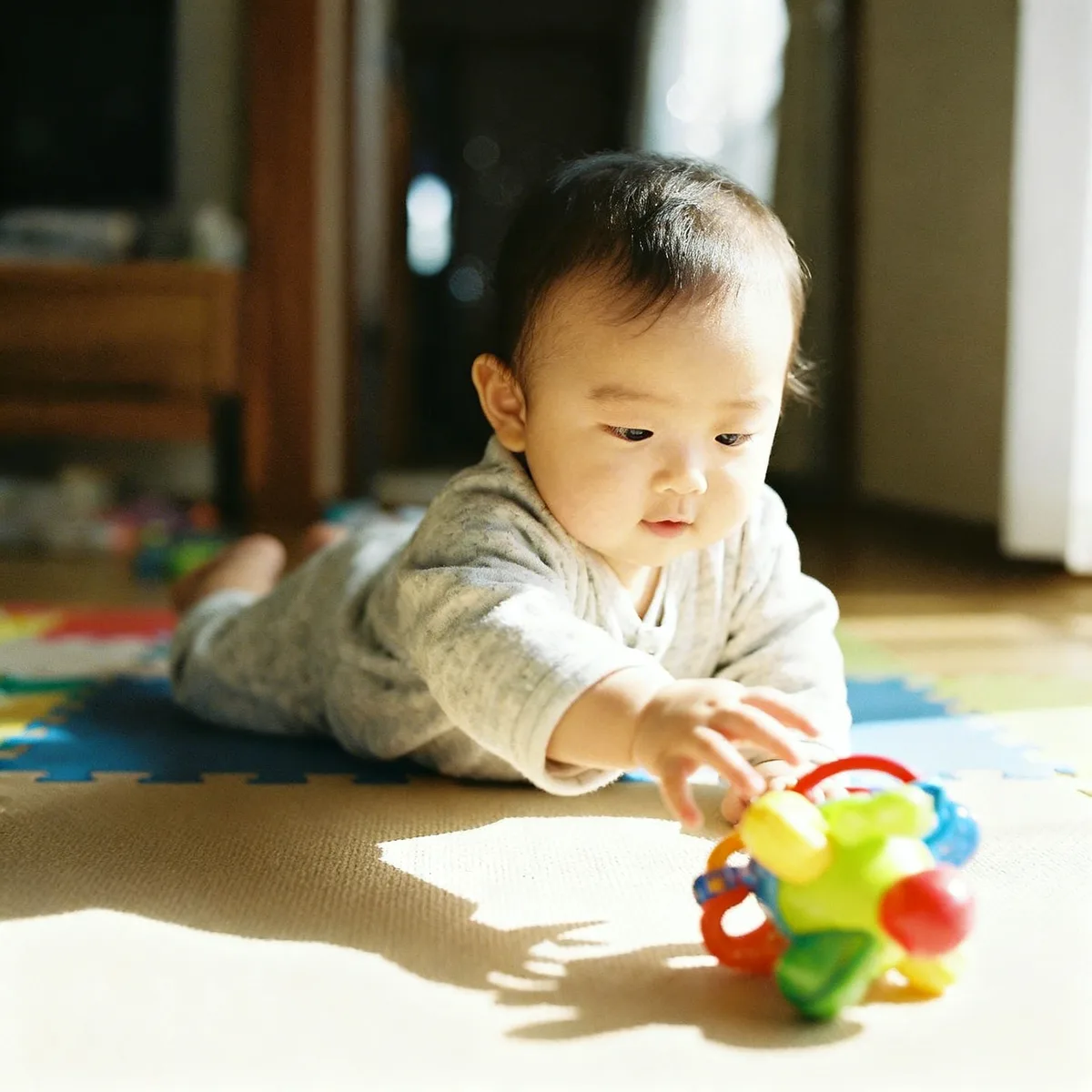
Throwing isn’t just playing for a baby. It’s a meaningful learning process. They’re asking themselves, “What happens if I let this go?” or “What sound does it make when it hits the floor?” Through repetition, babies learn the cause-and-effect relationship between their actions and the environment. Even your reaction becomes part of their experiment.
To throw something, a baby needs to coordinate fine motor skills (gripping), gross motor skills (swinging the arm), and focus their gaze on the target all at once. So throwing things repeatedly shows that their body control is developing well. They’re practicing how to use their body perfectly.
Since babies can’t express their feelings with words yet, throwing becomes a powerful way to communicate. It might mean they’re bored, frustrated, or seeking more attention. This isn’t defiance, but a straightforward and active way for them to communicate without words.
If parents overreact, babies may find the response interesting and repeat the behavior. Instead of reacting emotionally, calmly say something like, “We don’t throw this,” in a clear tone. Then remove the object from your baby’s sight for a short moment to signal that the situation is over.
Instead of stopping this healthy behavior, create a safe space where throwing won’t cause harm or stress. For example, during meal times when cup throwing is common, durable products can ease stress for both baby and parents.
The Grosmimi PPSU Straw Cup is one of those things worth having on the table during this stage. It’s made from PPSU — a material tough enough to handle repeated drops without cracking — and its leak-proof ‘+’cut design means the floor stays dry even when your baby’s experiment goes sideways. One less thing to stress about while you stay calm and consistent.
Throwing is part of exploration, growth, and communication. Instead of trying to stop it outright, focus on creating a safe space where your baby can freely explore. Your relaxed attitude will be the strongest support for your baby’s healthy development.
Key Takeaways
Sources :
It feels like defiance, but it really isn’t. Your baby is running a tiny experiment — they’re learning what happens when they release something, watching it fall, listening for the sound, and watching your face for a reaction. It’s cause-and-effect learning, and the highchair tray is their lab.
Most babies start intentional throwing somewhere between 8 and 12 months, once they’ve developed enough grip and arm control to actually release objects deliberately. If yours is doing it, it’s actually a sign their motor skills and brain-body coordination are coming together nicely.
The hard truth is you can’t fully stop it — and reacting big usually makes it worse because your reaction becomes the most interesting part of the experiment. A calm, short response like “we don’t throw this” and briefly removing the object tends to work better than anything dramatic over time.
It’s a really common worry, but throwing at this age is developmentally normal, not a red flag. Babies throw because they’re curious, bored, frustrated, or just figuring out how their body works — not because something is wrong with them or your parenting.
Regular plastic cracks, silicone lids pop off, and suddenly you’re mopping the floor for the fifth time before lunch. Cups made from PPSU material — like the Grosmimi PPSU Straw Cup — hold up to repeated drops without cracking, and a leak-proof design means the liquid actually stays inside when it hits the floor.