


Baby: 3–12 Months
4 Month Old Milestones, Development & Sleep Changes (No Fluff, Just Facts)
Laeeka Edries·13 min read

Explore 6 month old milestones, starting solids, and what to expect developmentally. A grounded, honest guide for the beautiful chaos of this stage.
Six months goes faster than anyone warns you. And somehow, right at the halfway mark, everything accelerates — your baby is hitting 6 month old milestones left and right, their personality is showing up, solids are on the horizon, and sleep might be doing something weird again. No worries. We’re breaking it all down — the what, the when, the how, and most importantly, the you’ve totally got this.
Six months is genuinely one of the most exciting developmental windows. Your baby is no longer just eating and sleeping — they are doing things. Big things. Here’s what’s typically on the milestone checklist right now:
Not every baby hits every milestone on the exact same day. If something feels off or you’re not seeing expected development, bring it up with your pediatrician — that’s what they’re there for. But in general? Six months is a beautiful chaos of firsts.
Starting solids at 6 months is one of those parenting chapters that sounds simple in theory and then immediately becomes a whole thing. The American Academy of Pediatrics gives the green light for most babies around six months — but there are readiness signs to look for beyond just the calendar flipping.
Signs your baby is ready for solids:
How to actually start: One new food every 3-5 days. This isn’t about being overly cautious — it’s about knowing what caused a reaction if one shows up. Start with single-ingredient purées or soft finger foods if you’re going the baby-led weaning route. Think: sweet potato, avocado, banana, peas, butternut squash.
And yes — breast milk or formula is still the main nutrition source right now. Solids at this stage are about exploration, texture, and getting used to the whole concept of eating. The food is basically a sensory experience with bonus calories.

So how do you fit solids into an already established milk routine without losing your mind? Here’s a realistic framework — not a rigid schedule, just a starting point you can actually work with:
Total milk intake at six months is typically 24-32 oz of formula per day, or nursing 4-6 times if breastfeeding. Solids start at just a few teaspoons and build slowly over weeks. Don’t stress if your baby spits more than they swallow at first. That’s the process.
One thing that makes mealtime less chaotic? Having the right setup. A good infant feeding seat keeps baby secure, upright, and in the correct position for swallowing safely — which matters more than most people realize when they’re just starting out. The Alpremio Infant Feeding Seat (available at Onzenna) is built with that feeding-safe positioning in mind. Pairing it with silicone tableware from Beemymagic — also at Onzenna — means less mess landing on you and more of it caught by something you can actually rinse off. Korean baby brands tend to engineer this stuff with both feeding safety and sensory experience at the center. It shows.
Here’s something nobody warns you about enough: the 6-month sleep regression is real, it’s cruel, and it makes zero sense because your baby was just starting to sleep better. Welcome to the chaos.
At six months, babies go through a significant developmental leap. Their brains are processing so much new information — rolling, sitting, babbling, recognizing faces — that sleep gets disrupted. This is normal. It doesn’t mean you did something wrong. It doesn’t mean sleep training failed. It means your baby is growing.

What sleep typically looks like at 6 months:
If you’re in the thick of a rough sleep patch right now, just know: it passes. The developmental milestone surge that disrupted sleep is the same one making your baby more interactive, joyful, and engaged during the day. It’s a trade-off nobody asked for, but it’s temporary.
Beyond the headline milestones, there’s a whole world of fine motor and sensory development happening at six months that’s easy to miss when you’re in survival mode.

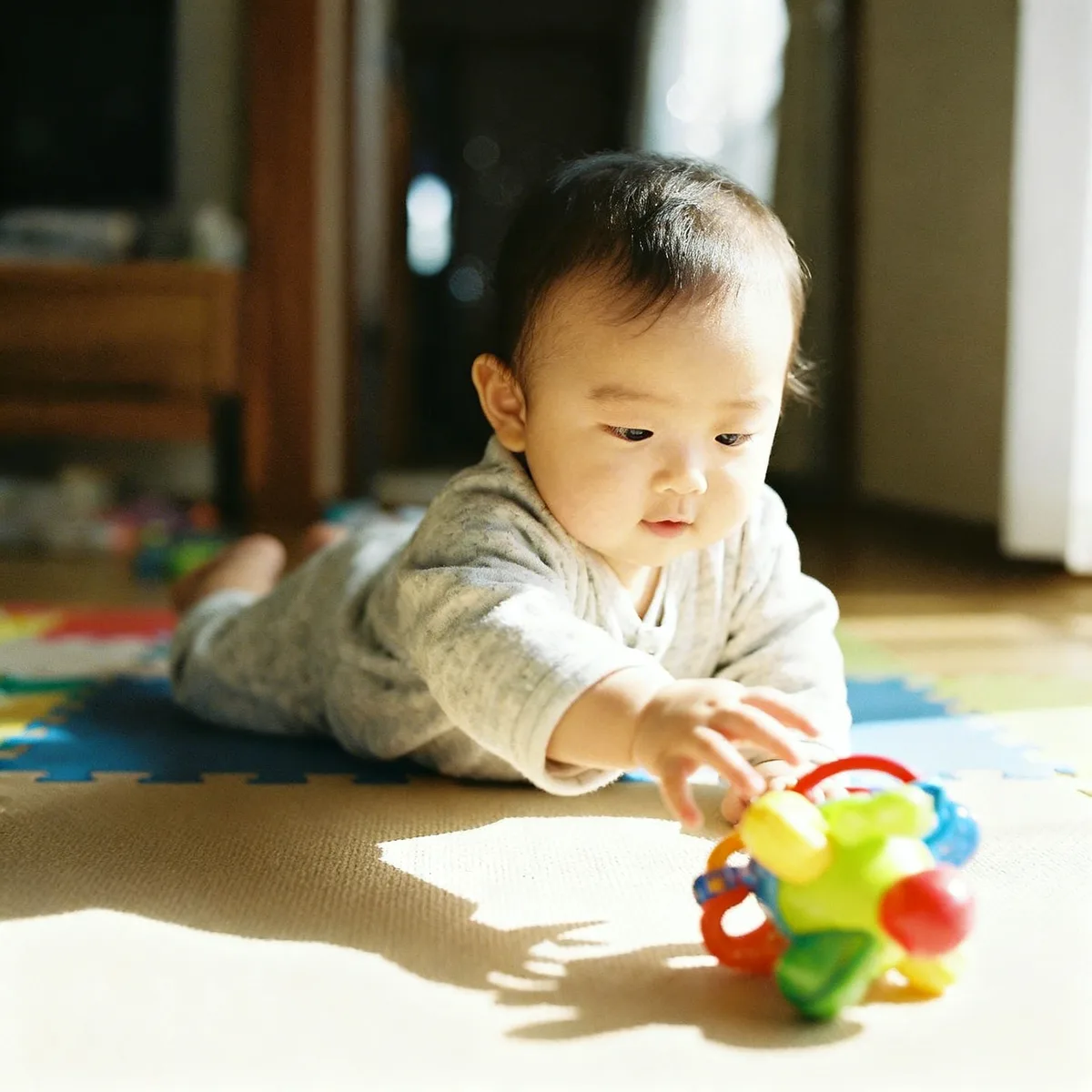
Fine motor skills: Babies at this stage are starting to use a raking grasp — using all their fingers together to pull objects toward them. They’re also passing objects from hand to hand, exploring textures by touching and mouthing everything.
Sensory development: Their color vision is now close to adult-level. They’re drawn to contrast, faces, and movement. High-contrast toys and books? Still relevant and still fascinating to them.
Social-emotional development: Stranger anxiety can start creeping in around now. Your baby might cry when unfamiliar people hold them — this is developmentally appropriate, not a behavior problem. It means their attachment system is working exactly as it should.
Language foundation: Respond to their babbles like you’re having a real conversation. You ar
Month by Month Baby Development
By 6 months, most babies can sit with support, roll both ways, babble with consonant sounds, and transfer objects from one hand to the other—though every baby develops at their own pace.
Signs of readiness include sitting upright with minimal support, losing the tongue-thrust reflex, and showing interest in food; 6 months is typically when you can start, but talk to your pediatrician first.
Most 6-month-olds don’t have teeth yet—teething usually starts between 4-7 months—so it’s completely normal if your baby still has none at this age.