

Feeding Guides
Best Foods to Increase Toddler Weight: Nutrient-Dense Options That Actually Work
Laeeka Edries·11 min read

When to start solid foods isn't as obvious as everyone makes it sound. Here's the real timeline, the signs that actually matter, and what to skip.
Here’s what nobody tells you about when to start solid foods: the answer isn’t a single number on a calendar. It’s a combination of age, physical readiness, and developmental signals — and most of the conflicting advice you’ve seen online is because people keep skipping that last part. You’ve probably heard “6 months” as the standard, and that’s a solid starting point. But there’s a difference between a 6-month-old who’s ready and a 6-month-old who absolutely is not — and no one seems to want to talk about it. This article breaks down the actual timeline, the signs that matter, the ones that don’t, and what the first few weeks of solids realistically look like. No pressure. No Pinterest perfection. Just the stuff you actually need.
The American Academy of Pediatrics recommends exclusive breastfeeding or formula feeding for around 6 months before introducing solid foods. That “around” is doing a lot of work in that sentence. It doesn’t mean day 183 is go time. It means that somewhere in the window of 4–6 months, your baby’s gut, motor skills, and immune system are maturing to a point where solids become appropriate — and for most babies, that maturity lands closer to 6 months than 4.
The “4 months is fine” camp exists. Some older guidance supported it, and some pediatricians still lean early. But the current AAP position is clear: starting solids before 4 months is associated with increased risk of obesity and digestive issues. The window between 4 and 6 months is a grey zone — possible, but only with specific readiness signs present. Before 4 months? Not yet, regardless of what the baby seems to want.
This is where parents get tripped up. A lot of the things we interpret as “ready for solids” signs are just… baby things. Waking more at night, watching you eat, chewing on their hands — none of these are reliable readiness signals on their own. Here’s what actually counts:
If your baby is 5.5 months and ticking all four of these boxes, talk to your pediatrician. If they’re 6.5 months and still wobbly on head control, also talk to your pediatrician — but don’t rush it.
Some parents are told by their doctor to start at 4 months — sometimes for weight gain reasons, sometimes based on older practice patterns. This is a conversation worth having, not a directive worth following without questions. The WHO recommends exclusive breastfeeding for 6 months globally, and the AAP aligns with this for most infants.
If early introduction is recommended for your baby specifically, make sure you understand why, and what form that introduction looks like. A 4-month-old’s digestive system is still developing the enzymes needed to process starches efficiently. “Early” doesn’t mean “rush” — it means thin purees, tiny amounts, and a lot of observation.
Bottom line: between 4 and 6 months is a window, not a countdown. Before 4 months is a hard stop for almost every healthy baby.
Here’s where the internet becomes a chaos machine. Baby-led weaning vs. purees. Single ingredient vs. mixed. Iron-fortified cereal vs. literally anything else. Let’s cut through it.

Your baby’s first foods need to do three things: be easy to swallow (or safely gum), introduce key nutrients, and not overwhelm a brand new digestive system. That’s it. The format — puree, mash, soft finger food — matters less than the nutritional content and the pace of introduction.
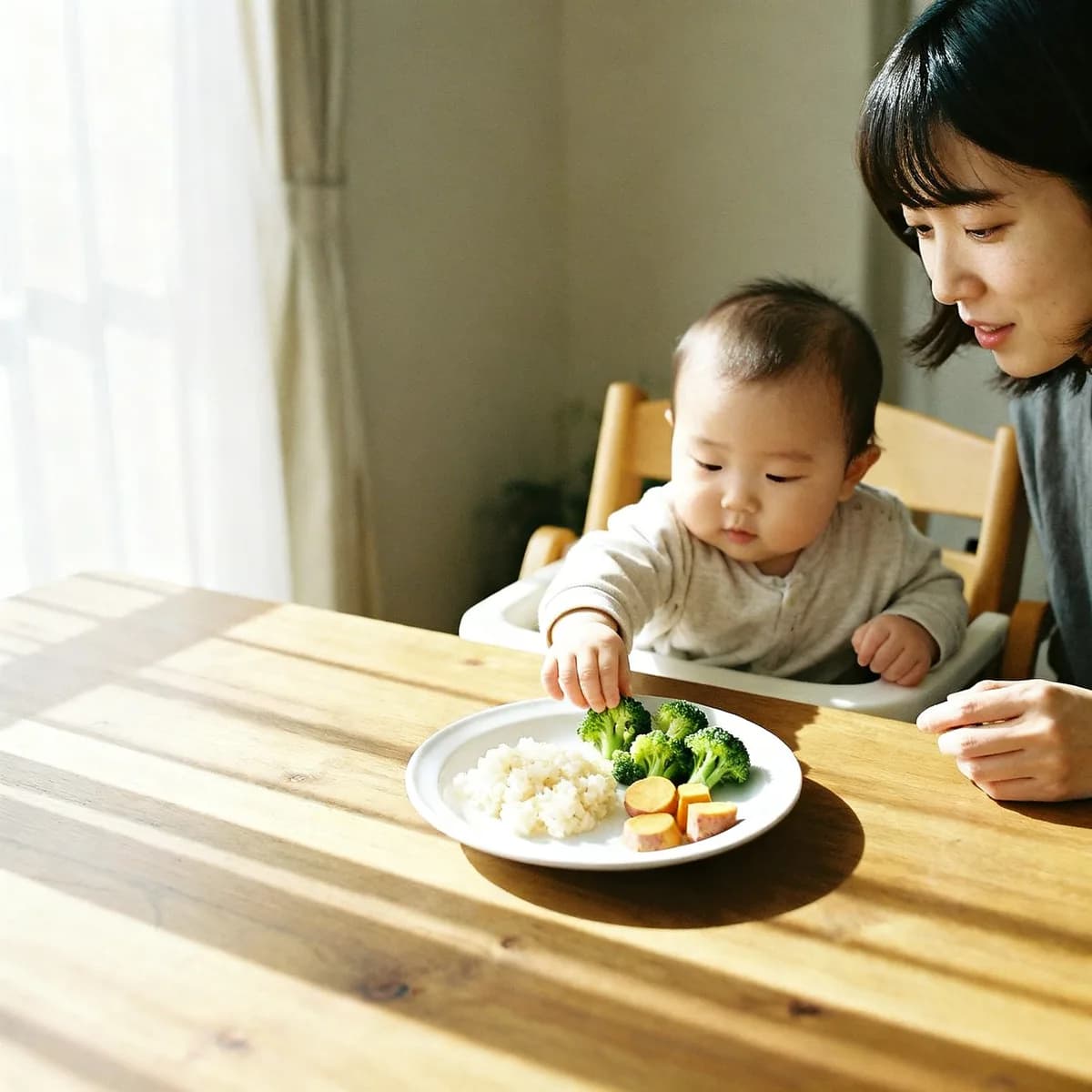
Baby-led weaning is a legitimate approach with real developmental benefits — it builds fine motor skills, encourages food curiosity, and keeps babies in control of how much they eat. But it requires a baby who can sit independently, has good hand-to-mouth coordination, and has no choking risk factors. It’s not for every baby at every stage. Spoon-feeding works too. You don’t have to pick a camp.
Your baby’s position during their first meals matters more than most feeding guides mention. A baby who’s reclined, slumped, or unsupported can’t swallow safely. They need to be upright — hips at 90 degrees, feet supported, core stable. This is why feeding chairs actually matter at the solids stage, not just for convenience.
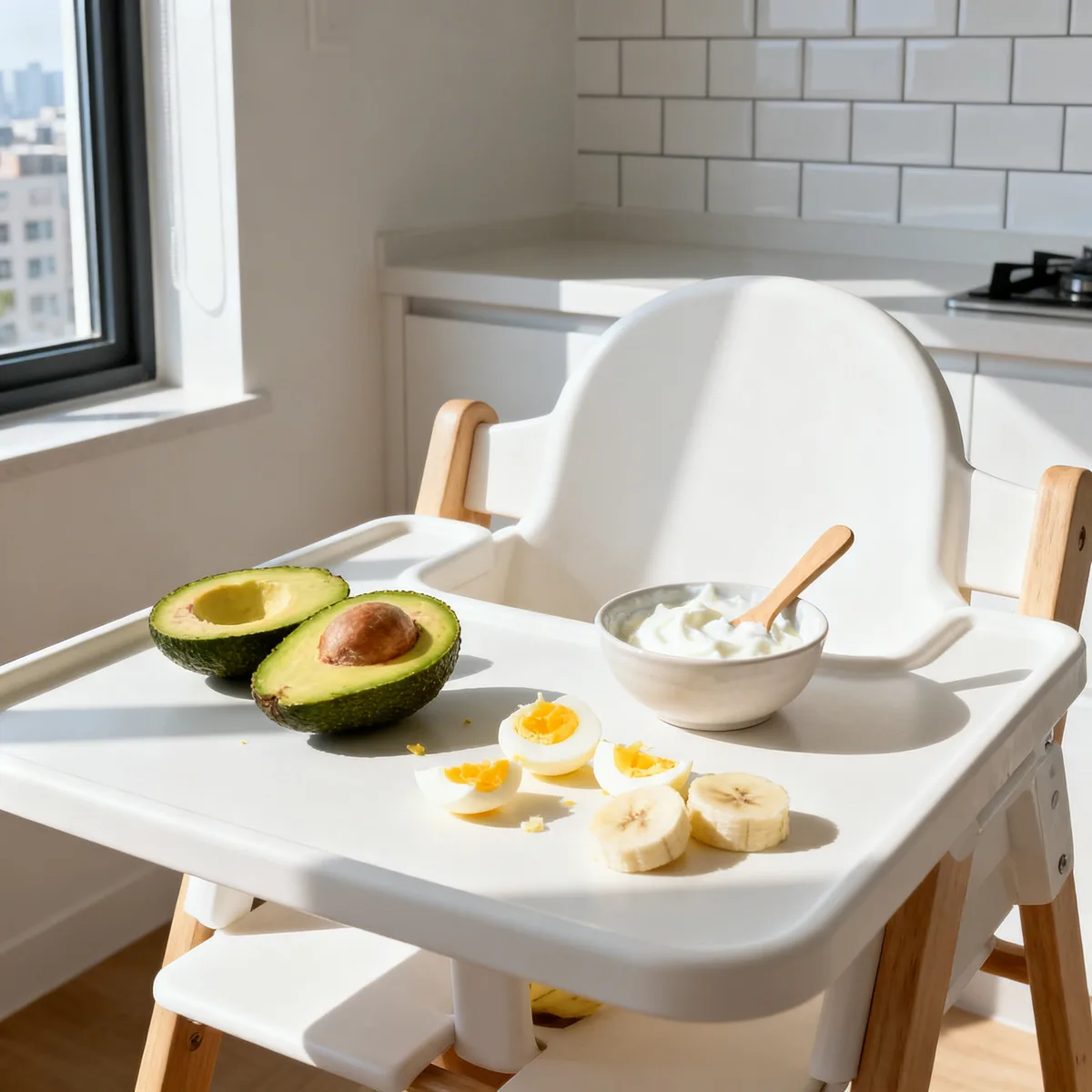
If you’re at this stage and improvising with a bouncy seat or your lap, it works — but it’s not ideal long-term. A proper infant feeding seat designed for the solids stage gives your baby the postural support they need to actually eat safely, not just sit near food. The Alpremio feeding seats available at Onzenna are built specifically for this transition window — designed to hold babies in the upright, supported position that makes early feeding safer and less messy. Alpremio infant feeding seats collection
Most of the stress around starting solids comes from a few very common misreads. Here’s what to watch for:
By around 7–8 months, most babies who started solids at 6 months are eating 2–3 small “meals” a day alongside their regular milk feeds. Textures are getting lumpier. The variety is expanding. And — this is the part nobody warns you about — the diaper situation changes completely. Welcome to that chapter.
Between 8 and 10 months, you’ll start seeing more finger foods. More self-feeding attempts. More food on the floor than in the mouth. This is normal developmental feeding behaviour — they’re learning, not wasting. The mess is the point.
By 12 months, the goal is a varied diet with three meals, some snacks, and a transition away from bottles toward open or straw cups. The AAP recommends dropping bottles by 12–15 months to support healthy oral motor development — and the type of cup matters here too. Straw cups train the oral muscles differently than sippy cups, and that difference has real implications for speech and swallowing patterns down the line.

American Academy of Pediatrics — Guidance on timing of solid food introduction, exclusive breastfeeding recommendations, and bottle-to-cup transition by 12–15 months (aap.org)
World Health Organization — Global recommendation for exclusive breastfeeding for 6 months before introducing complementary foods (who.int)
The current AAP guidance recommends waiting until around 6 months for most babies. Starting before 4 months is not recommended. Between 4 and 6 months is a grey zone — it’s only appropriate if specific physical readiness signs are present and your pediatrician is on board. Interest in food alone isn’t enough.
There’s no single “right” first food, but iron-rich options are a strong starting point — pureed meat, iron-fortified single-grain cereal, or mashed lentils. Introduce one new food every 3–5 days so you can identify any reactions. Keep the texture smooth and the serving small (a teaspoon or two is plenty at first).
Not necessarily. In younger babies (under 5 months), this can be the tongue-thrust reflex — a signal they’re not ready yet. In older babies, it’s often just the novelty of a new texture and sensation. Keep offering, stay relaxed, and don’t turn it into a battle. Repeated low-pressure exposure is how food acceptance builds.
Both are fine. Homemade purees let you control ingredients and texture progression. Store-bought pouches are convenient and nutritionally adequate. The real issue with pouches is over-reliance — if your baby only ever eats from a pouch, they miss the spoon-feeding and eventually finger-food experience that builds oral motor skills. Use them as a tool, not the whole toolkit.
In the first weeks of solids, the amount is almost irrelevant. You’re introducing a skill, not replacing calories — breast milk or formula is still doing the nutritional heavy lifting until 12 months. Signs that things are going well: your baby is curious and engaged at mealtimes, continues to grow on their curve, and is still drinking their usual milk. Talk to your pediatrician if you have concerns about intake or growth.