

Feeding Guides
Best Foods to Increase Toddler Weight: Nutrient-Dense Options That Actually Work
Laeeka Edries·11 min read

Ready to transition bottle to sippy cup but don’t know where to start? This is the honest, practical, chaos-tested guide every modern mom actually needs.
Here’s what nobody tells you about the bottle-to-cup transition: the bottle isn’t the problem. The attachment to the bottle is — and there’s a difference. Most moms try to swap the cup and wonder why their baby is inconsolable, when really the issue isn’t the vessel. It’s the routine, the comfort, the whole thing the bottle represents. Once you understand that, the transition stops feeling like a battle and starts feeling like a slow, manageable shift. This guide breaks down exactly when to start, how to do it without the meltdown spiral, and what kind of cup is actually worth your money — because not all of them are.
The American Academy of Pediatrics recommends transitioning away from bottles between 12 and 15 months. Not 18 months. Not “whenever feels right.” There’s a real developmental reason for that window: prolonged bottle use — especially overnight bottles — is linked to tooth decay and can affect the way your baby’s jaw and palate develop over time. The longer you wait past 15 months, the more entrenched the habit becomes, and the harder the transition gets. That’s not a scare tactic. That’s just how habit formation works in toddlers.
So if your baby is anywhere between 6 and 12 months, you’re actually in the sweet spot to start introducing a cup alongside the bottle — no pressure, no full swap yet. Just exposure. By 12 months, you start phasing the bottle out. By 15 months, ideally, you’re done.
Your baby isn’t refusing the cup because it’s bad or wrong. They’re refusing it because it’s new, and new things are inherently suspicious when you’re 11 months old and have zero coping tools. The bottle is warm, familiar, and associated with being held and fed by you. The cup is a plastic thing that showed up out of nowhere and requires completely different mouth mechanics.
Here’s the real kicker: sucking from a bottle is a passive action. Drinking from a straw or an open cup requires active muscle engagement — different oral motor coordination that babies have to literally learn. So when your baby looks at you like you’ve lost your mind and throws the cup on the floor, they’re not being dramatic. They’re just doing math they haven’t been taught yet.
That’s why slow and steady wins here. Introduce the cup at low-stakes moments first — not at the feed they’re most attached to (usually the bedtime bottle). Start with the midday feed when everyone’s in a decent mood. Let them play with it. Let them figure it out. Mess is progress.
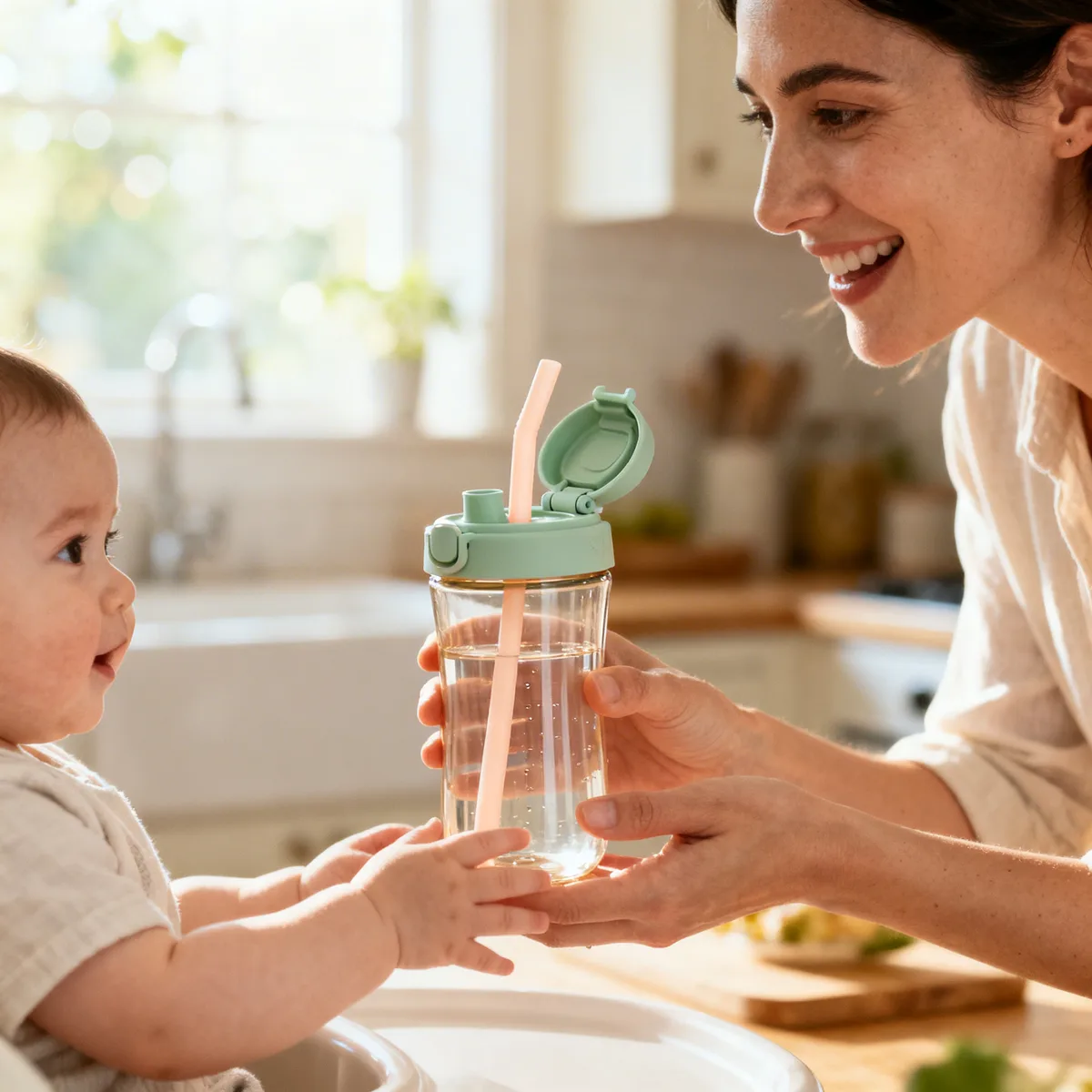
This is where it gets interesting — and where a lot of parents accidentally make the transition harder. Traditional sippy cups with a hard spout? Speech-language pathologists and pediatric dentists are increasingly skeptical of them. The hard spout mimics a bottle in terms of oral motor mechanics, which means you’re not really teaching your baby a new skill — you’re just swapping one sucking habit for another.
Straw cups, on the other hand, require your baby to use a completely different muscle pattern — one that actually supports healthy oral motor development and sets them up for open-cup drinking later. Open cups (yes, the kind that spills everywhere) are also great for development and can be introduced as early as 6 months with a small amount of water at mealtimes.
The short version: if you want to skip a step in the transition process, go straw cup over hard-spout sippy. Your future self — and your baby’s speech therapist — will thank you.

If you’re going the straw cup route, material matters more than most people expect. The Grosmimi PPSU Straw Cup, available at Onzenna, is made from PPSU — a medical-grade material that’s BPA-free, heat-resistant, and doesn’t hold onto smells the way standard plastic does. The straw is designed to support the oral motor mechanics that actually aid development, not just make cleanup easier. It’s not flashy. It just does the job it’s supposed to do.
Every baby is different, but this general framework gives you a starting point without locking you into a rigid schedule that’s going to collapse the second your baby gets a cold.
Let’s be honest: the bedtime bottle isn’t really about hunger. It’s about the wind-down signal — the warmth, the closeness, the “okay, we’re done with the day” feeling. And that’s completely valid. The problem is that falling asleep with milk in the mouth, from a bottle, is one of the biggest contributors to early childhood tooth decay. So this one has to go, even if it’s the last to go.
The trick is replacing the ritual, not just the bottle. A warm cup of milk (from a straw cup or open cup) offered earlier in the bedtime routine — before teeth brushing, not after — can serve the same comfort function. Pair it with a consistent wind-down: dim the lights, do the bath, read the same two books, same order, every night. The routine becomes the comfort signal. The bottle just fades out.
It won’t be seamless. There will be a few rough nights. But if you’re consistent for 5–7 days, the new routine usually takes hold.
First: you’re not failing. Cup refusal is extremely common and almost always temporary. A few things that actually help:
Most pediatricians recommend starting around 6 months when your baby can sit up with minimal support. However, many parents find 9-12 months works better when babies have stronger motor skills. There’s no exact “right time”—follow your baby’s developmental cues rather than a strict timeline.
Every baby is different, but expect 2-4 weeks for noticeable progress. Some babies adapt in days, while others take several months. Stay consistent and patient. If your baby is resisting strongly, wait a few weeks and try again rather than forcing the transition.
Gradual is almost always easier. Start by replacing one bottle—typically daytime feeds—with a sippy cup. Once your baby is comfortable, swap out another bottle. Most parents find it easiest to replace the midday bottle first, then work toward the bedtime bottle, which often takes longest.
Yes, it’s completely normal, though incredibly frustrating. Babies are experimenting with cause and effect. Use a cup with a secure lid to minimize mess, avoid making it a game by immediately retrieving it, and keep offering the sippy cup at meals without pressure. This phase typically passes within a few weeks.