

Baby: 3–12 Months
4 Month Old Milestones, Development & Sleep Changes (No Fluff, Just Facts)
Laeeka Edries·13 min read

Not all babies walk at one year, and that is completely normal. Discover real 12 month old milestones walking, talking, and what the range actually looks like.
One year goes fast — and then suddenly there’s a tiny human pulling themselves up on your coffee table, looking you dead in the eyes, and letting go.
You made it. And somehow your baby went from a sleepy, milk-drunk newborn to a full-on little person with opinions, preferences, and the audacity to throw their snack cup on the floor — repeatedly — while maintaining eye contact. The 12 month old milestones era is wild, beautiful, and honestly kind of overwhelming. There’s a lot happening developmentally right now, and it can be hard to know what’s “on track,” what’s normal variation, and what’s just your kid being extra. This article breaks it all down — no clinical jargon, no mom-shaming, just real talk about what to expect when your baby hits the one-year mark.
Here’s the thing about 12 month old development — there’s a huge range of “normal.” Like, a genuinely massive range. Some babies are sprinting across the living room at 11 months. Others are perfectly content to cruise along the furniture and take their sweet time. Both are fine. What matters is the overall trajectory, not the exact timing.
At 12 months, your pediatrician will generally be looking for progress in four main areas:
We’re going to dig into each of these — plus the stuff nobody puts in the milestone apps, like why your formerly chill baby has suddenly turned into a velcro human who loses it every time you leave the room.
Let’s address the elephant in the room — or rather, the wobbly little human in the room. Walking is the milestone every parent is hyper-focused on at this age, and it’s also the one that causes the most unnecessary panic.
Here’s the real talk: only about 50% of babies are walking independently by their first birthday. The other 50% are still cruising, crawling at the speed of light, or doing that hilarious bear-crawl thing. The typical range for independent walking is 9 to 18 months. Yes, 18 months. So if your one-year-old isn’t walking yet, you are well within normal territory.

What you do want to see by 12 months:
If your baby isn’t pulling to stand at all by 12 months, that’s worth mentioning to your pediatrician — not to panic, just to check in. But a baby who’s cruising confidently and just not ready to let go? Totally fine. They’re just taking their time, and honestly, respect.
At 12 months, your baby is deep in the communication trenches — and “talking” looks a lot different than you might expect. We’re not looking for full sentences or even clear words necessarily. We’re looking for intentional communication.
Typical 12 month old language milestones include:
Pointing is actually a huge deal right now — it’s a sign of something called joint attention, which is a key social-cognitive skill. If your baby is pointing at things to show you stuff (not just to get things), that’s a really positive sign.
Pro tip: talk to your baby constantly. Narrate your day. Describe what you’re doing. It feels unhinged to monologue to a tiny person about folding laundry, but it genuinely builds their vocabulary and language comprehension. You’re basically a podcast they’re obsessed with.

Okay. Let’s talk about the behavioral stuff that nobody fully prepares you for. Your sweet, relatively predictable baby has now developed object permanence, strong preferences, and big emotions — and they do not have the tools to manage any of it yet. Welcome to the Vibe Shift era.
Here’s what’s happening:

The chaos management strategy here is simple: validate the feeling, stay calm, hold the boundary. You don’t have to fix every upset. You just have to be the steady presence while they move through it. Easier said than done at 6 PM on no sleep, we know.
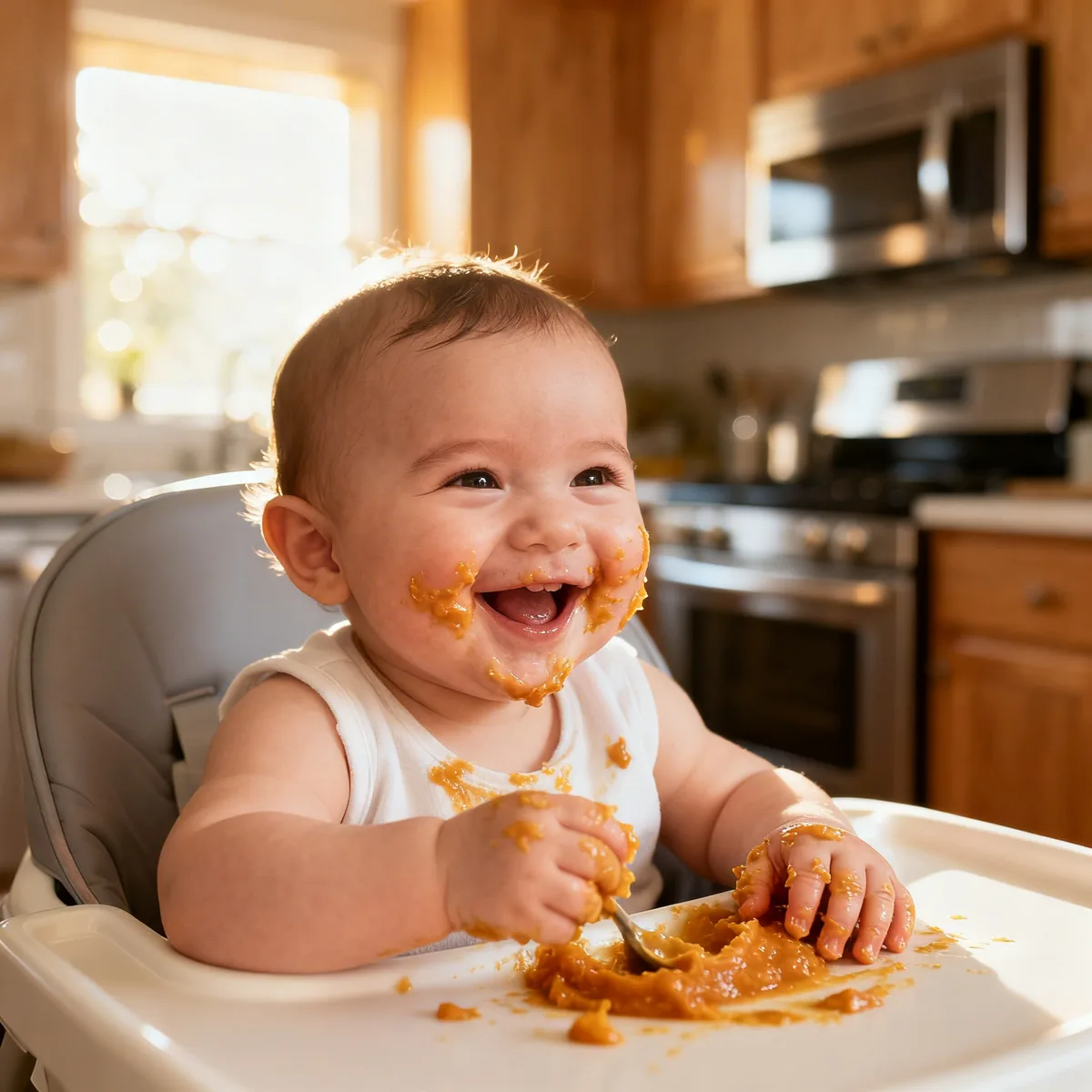
This is a big one. Around 12 months, your baby is transitioning away from formula or breast milk as their primary nutrition source and starting to eat more family foods. This is exciting and also kind of a mess — literally.
Here’s what feeding looks like at 12 months:
The bottle-to-cup transition trips a lot of parents up. Babies who are attached to their bottles often resist cups at first — totally expected. The key is finding a cup your baby actually likes and practicing consistently without making it a power struggle. Soft straw cups that mimic the sucking motion of a bottle tend to be the easiest transition for most babies.
Month by Month Baby Development
Not necessarily—babies typically start walking between 12-15 months, so a 1-year-old who’s cruising furniture or crawling is right on track. If your baby isn’t showing interest in walking by 18 months, mention it to your pediatrician.
Most babies walk later than 12 months without any issues; genetics, personality, and physical development all play a role. As long as your baby is crawling, pulling up, or cruising by 12 months, the walking will come.
Most 1-year-olds say 1-3 words (like “mama,” “dada,” “bye”), but some say none yet and that’s still normal. Comprehension matters more at this age—if your baby responds to their name and simple requests, language development is fine.