


Nursery & Home
How to Set Up a Baby Nursery Without Wasting Money: A Smart Parent’s Guide
Soyeon Park·12 min read

Skip the clutter. Discover what not to put on your baby registry, which items parents actually regret, and how to prioritize what really matters.
POV: You’re scrolling through a baby registry website at midnight, adding a wipe warmer because it exists, a dedicated diaper pail because it looks professional, and a crib mobile because the packaging promises developmental benefits.
Here’s what actually happens: most of it ends up in a closet by month three. Knowing what not to put on your baby registry is just as important as knowing what to add — maybe more important, because space, money, and your sanity are all finite resources.
This guide cuts through registry culture and tells you which items genuinely help and which ones are just taking up space.
The wipe warmer. The diaper stacker. The dedicated changing table that takes up half the nursery. These are the things that look essential in a showroom and collect dust in real life.
Knowing what not to put on baby registry matters as much as knowing what to add. Because space is finite, money is finite, and your energy after a newborn arrives is extremely finite.
The wipe warmer is the classic offender. Babies adapt to room-temperature wipes within days. What you get instead: dried-out wipes, a cord to trip over, and one more thing to clean.
Dedicated diaper pails are another one. The cartridges cost more than you’d expect, and you’re still taking out trash. A regular bin with a lid and a trash bag does the same job.
Newborn shoes. They can’t walk. The shoes fall off. Moving on.
Baby food makers sound practical until you realize a blender and some ice cube trays do the exact same thing — and if you’re reading our high chair buying guide, you already know solid feeding comes with enough gear decisions without adding another appliance.
The Boppy pillow is everywhere on registries. It genuinely helps some people with nursing. It does nothing for others. Borrow one first if you can.
Infant bath tubs tend to be used for about eight weeks before your baby outgrows the newborn insert and you’re just using the regular tub anyway. A bath seat costs less and lasts longer.
The common thread here: items designed for a single, very short phase — or items solving a problem that doesn’t actually need solving. Registry culture makes everything feel necessary. Most of it isn’t.
The nursery is where registry bloat really takes hold. Everything looks intentional and necessary in a showroom. Most of it collects dust by month three.
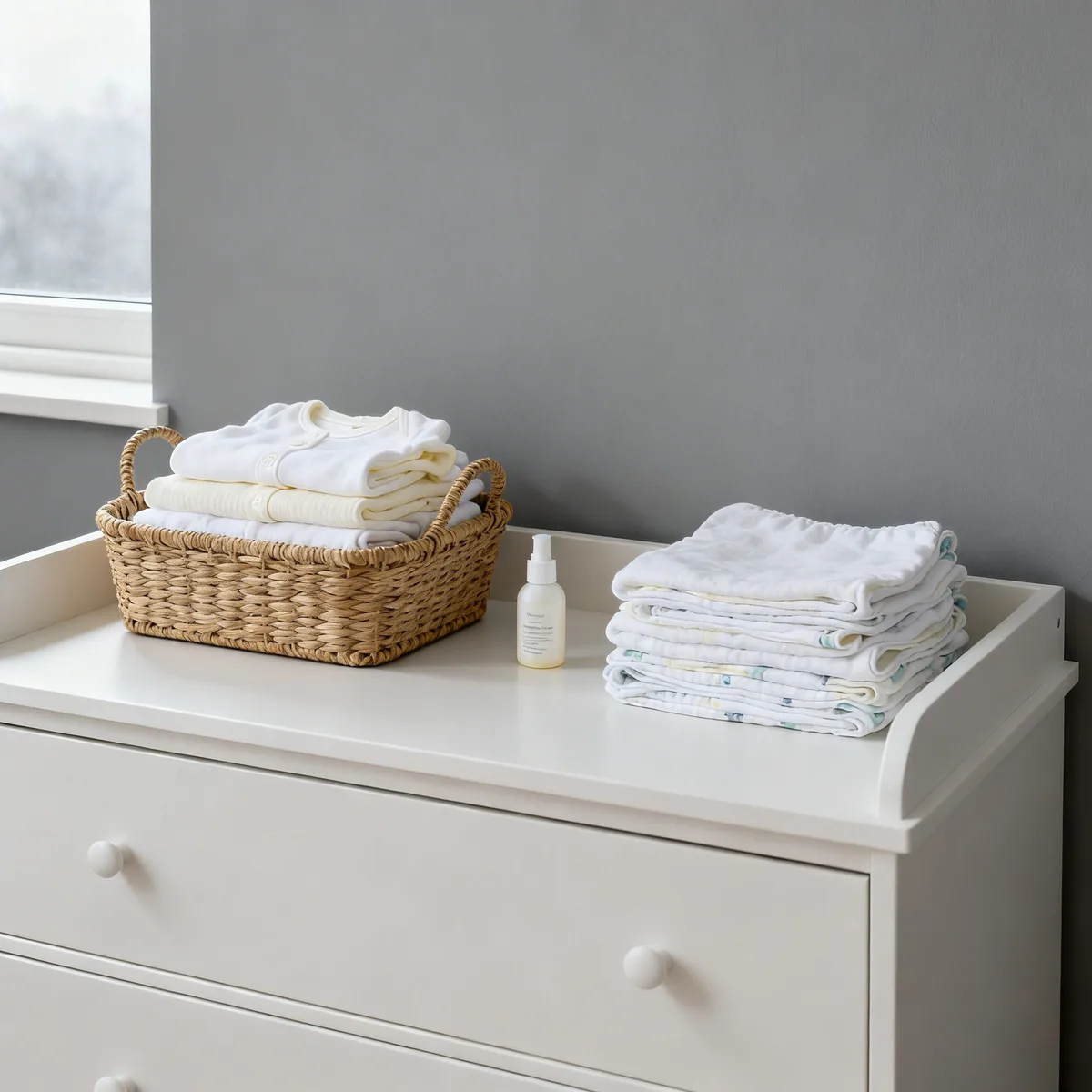
The dedicated changing table is the biggest offender. It takes up real floor space, costs several hundred dollars, and does exactly one thing. A changing pad on top of a dresser you already need does the same job — and you keep the dresser after the diaper years are over.
Wipe warmers sound considerate. In practice, they dry out wipes, require regular cleaning to prevent mold, and your baby adapts to room-temperature wipes in about two changes.
The crib mobile gets a lot of registry real estate. Newborns can’t track movement or focus on hanging objects the way the packaging implies. By the time visual development actually catches up — and if you’re curious about that timeline, 26 weeks pregnant is when fetal eye development starts getting interesting — your baby is close to pulling things down anyway.
Nursery gliders with matching ottomans are another one. You will use a feeding chair. You don’t need it color-coordinated to the crib. A secondhand glider works identically to a new one at three times the price.
Decorative shelving, themed wall art sets, and letter name installations look great on Instagram. They do nothing for your baby and everything for the aesthetic. Skip them on the registry entirely — that’s discretionary spending, not a need someone else should fund.
If you’re thinking through what not to put on baby registry, the nursery category is where you save the most money with the least sacrifice. The room doesn’t need to be a catalog page. It needs a safe sleep surface, a place to change, and somewhere for you to sit.
The feeding aisle of any baby registry builder is a trap. It’s full of single-use gadgets that solve problems you don’t have yet — and mostly won’t.
Bottle warmers are the classic example. They heat milk slowly and unevenly, take up counter space, and break within a year. A bowl of warm water does the same job in the same amount of time.
Electric sterilizers follow the same logic. Your dishwasher’s sanitize cycle works. So does boiling water. You don’t need a dedicated appliance for something you already own the tools to do.

Bottle drying racks that look like little grass gardens? Charming. Also constantly damp, prone to mold in the base, and takes up more counter space than you have. A clean dish towel is not an inferior solution.
Wipe warmers are another one. Babies don’t actually need warm wipes — they adapt. What wipe warmers do reliably is dry out wipes at the edges and give you one more thing to plug in.
Baby food makers, “fresh food feeders,” and silicone molds for freezing homemade purees all presume a very specific feeding path. If that’s not where you land, they collect dust. Add them later if you need them — don’t registry them speculatively.
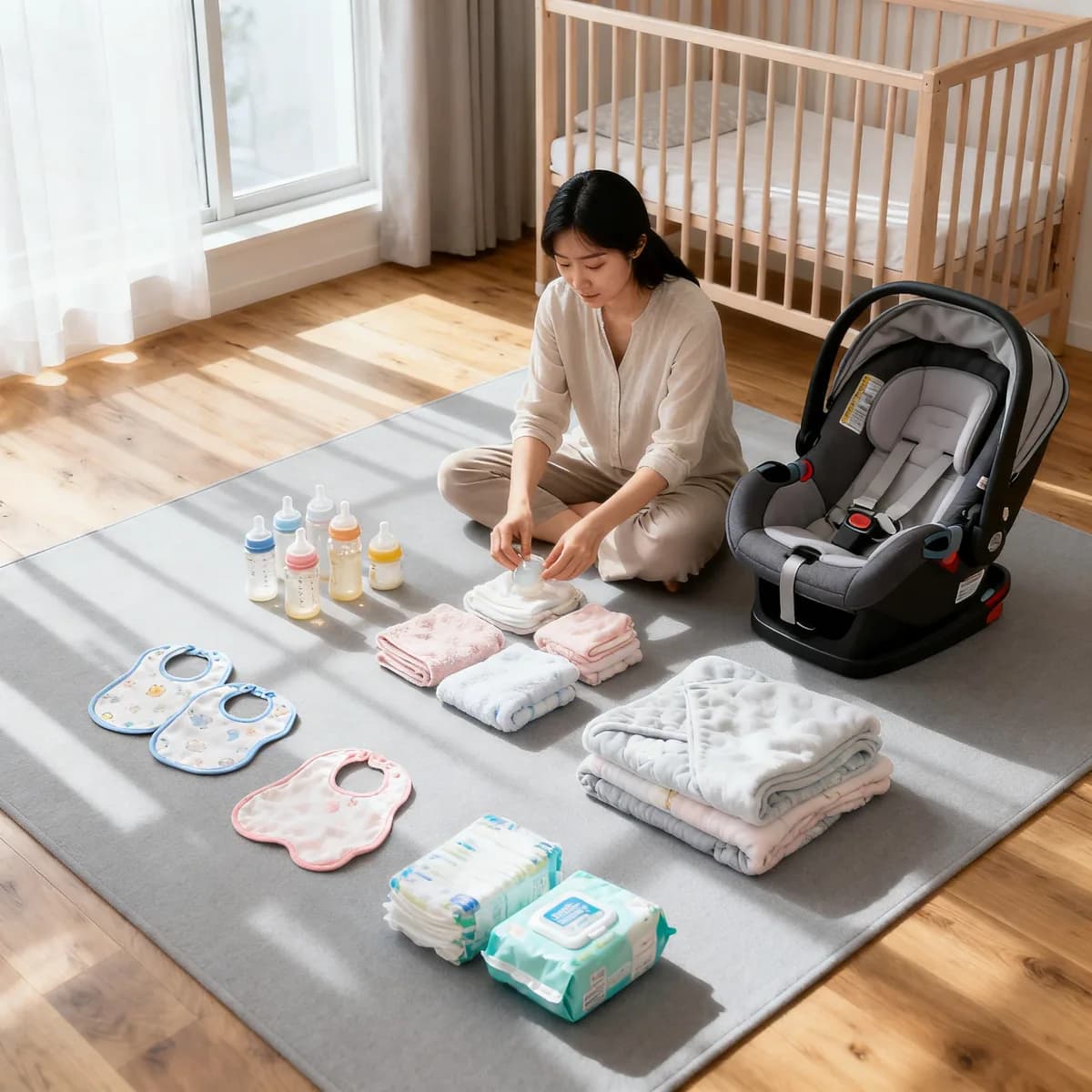
The only feeding gear worth putting on a registry is what you’ll use from week one: bottles if you’re formula feeding or pumping, a good nursing pillow if you’re breastfeeding, burp cloths in real quantity. That’s the list.
If you later find yourself with a toddler picky eater, you can buy the silicone molds then. Right now, keep the registry boring. Boring means useful.
Baby clothes are where registries go to die. Everyone buys them anyway, which means you’ll have more onesies than you can use — and half will be outgrown before they’re worn.
Don’t registry-load newborn sizing. Babies blow past it in weeks. If you want clothing on your list, go 3-6 months and up, keep it simple, and ask for multipacks over individual “outfits.”
Novelty pieces — the tiny tuxedo, the themed Halloween costume for a baby who won’t remember Halloween — are exactly what not to put on baby registry. Cute in the store. Useless in real life. Someone will buy them for you regardless, so don’t waste a registry slot on them.
Themed bedding sets are a different problem. The coordinated bumper-quilt-fitted sheet ensemble looks great in a showroom. In practice, bumpers are a safety hazard, quilts stay in the closet, and the fitted sheet is the only thing that matters.
Buy fitted sheets separately. You need at least three — more if you want to get through a blowout night without doing laundry at 3am. Waterproof mattress covers too. That’s your bedding list.
Swaddle blankets are worth having, but six is plenty. Muslin sets in packs of eight and decorative knit throws pile up fast. If your baby has sensitive skin, fabric choices actually matter — something worth thinking about before you add a dozen random textile items. Baby eczema treatment often starts with eliminating irritants in what’s touching their skin all day.
The pattern here: if it’s mostly decorative, skip it. If it comes in a “set,” break the set apart and only add what you’d actually use. Clothing and bedding should work, not perform.
The baby bath category is where registries go to get bloated. A dedicated baby tub is useful for the first few months — that’s it. The foam inserts, the built-in thermometers, the ergonomic seats: mostly unnecessary.
A simple infant tub with a mesh sling or newborn insert does the job. You don’t need a thermometer toy when your elbow works fine. Skip the extras and save the registry space.
Skincare is where the marketing really escalates. “Clinically tested,” “dermatologist approved,” “natural” — these phrases mean almost nothing without context. Newborn skin needs very little: a fragrance-free wash, a basic moisturizer if they’re dry, and that’s genuinely it.
Baby lotion, baby oil, baby powder, baby wash, baby shampoo — brands want you registering for all of it separately. In practice, one gentle, fragrance-free wash and one unscented moisturizer covers almost every newborn scenario.
Knowing what not to put on baby registry matters most in this category. Scented products are one of the most common skin irritants for newborns. If there’s any family history of eczema or sensitive skin, fragrance is the first thing to cut.
The Cha&Mom fragrance-free body wash at Onzenna is formulated without the usual irritants — worth adding if you want one less decision to make postpartum.
Cotton washcloths are genuinely useful. You’ll go through them constantly — for bath time, for faces, for everything. Add a stack of plain ones.
What you don’t need: specialized “baby bubble bath,” any product with added fragrance or dye, and the elaborate bath toy sets marketed for newborns who can’t see more than twelve inches in front of them yet. Save those for when they’re actually interested.
The tech baby gear market has gotten very good at selling you a feeling — specifically, the feeling that you can monitor your way out of new-parent anxiety.

Wifi-enabled sock monitors, AI breathing trackers, smart bassinets with app connectivity: these are exactly the kind of things that end up on every aspirational registry and in a drawer by month three.
The sock-style pulse oximeters are a good example. They generate false alarms constantly, which means you’ll be jolted awake more than your baby will wake you — and that’s saying something. If your pediatrician hasn’t flagged a medical reason to track oxygen levels, you don’t need one.
Smart bassinets with automatic rocking and white noise built in can genuinely help in the early weeks — that part is real. The problem is the $200 app subscription you didn’t clock in the fine print, and the fact that babies outgrow them fast.
It’s worth knowing that baby not sleeping through night is almost always developmental, not a problem your smart device can fix. Spending a lot on tech to solve it usually just adds one more thing to troubleshoot at 3am.
The novelty items fall into the same trap. Wipe warmers sound considerate until you realize they dry out the wipes and grow bacteria. Bottle sterilizers with eight settings do exactly what boiling water does.
A lot of what not to put on baby registry falls squarely in this category — gear that solves a problem you don’t actually have yet, or one that turns out to be much smaller than the marketing suggested.
The simpler version of almost any high-tech baby product works just as well. Sometimes better, because there’s less to break.
Start with three questions: Do I have space for it? Will I use it in the first three months? Does it solve a real problem or an imagined one?
If something fails two out of three, it probably doesn’t belong on the list.
Your lifestyle matters more than any registry checklist. A family in a 700-square-foot apartment and a family with a mudroom and a garage are not building the same registry — and they shouldn’t be.
Think in phases. The newborn stage has a specific, short list of actual needs: safe sleep, feeding support, a way to carry the baby. Most other things can wait until you know who your kid is and how you actually live.
The registry trap is building for a hypothetical baby. You don’t know yet if yours will hate the swing, refuse a pacifier, or only sleep flat on their back. Registering for multiples of anything — especially feeding and sleep gear — before you’ve tested one is a fast way to end up with a cluttered nursery and a complicated return situation.
Add things you’d buy yourself. That’s a useful filter. If it wouldn’t make your own short list, it probably doesn’t need to be on the registry either.
For anything that touches how you move through the world with a baby — baby carrier types are worth actually researching before you commit, because fit and lifestyle determine what works, and the wrong one just collects dust.
Leave room on the list for consumables: diapers in multiple sizes, wipes, nipple cream, postpartum supplies for you. People want to buy things. Let them buy things you’ll actually run out of.
Wipe warmers, dedicated diaper pails, newborn shoes, infant bath tubs, and crib mobiles top the list — they either solve problems that don’t exist, are used for a few weeks, or do the same job as something cheaper you already own.
Skip all three. A regular trash can with a lid works perfectly for diapers, babies adapt to room-temperature wipes within days, and bottle warmers add complexity without solving a real problem — running tap water over a bottle works just fine.
Register for 5-7 outfits in newborn and 0-3 month sizes (babies grow fast and you’ll do laundry frequently), and 2-3 fitted sheets for the crib so you have time to wash between changes without stress.
Dedicated changing tables, expensive nursery gliders, baby food makers, and high-tech gadgets like wipe warmers and fancy humidifiers promise convenience but deliver clutter instead — simpler, cheaper alternatives do the same job.
Absolutely. For items you’re unsure about — like the Boppy pillow, which works for some parents and not others — wait and see what you actually need after the baby arrives, then buy strategically or borrow from friends.