


Activities & Play
Road Trip with Toddler: Tips, Activities & Packing Strategy That Actually Works
Jeehoo Jeon·11 min read

Tummy time activities by age — from newborn gentleness to crawling prep. AAP-backed strategies to build strength, keep babies engaged, and skip the drama.
Here’s what nobody tells you about tummy time activities: they’re not optional, and they’re not just about avoiding a flat head. Your baby’s entire movement story — rolling, sitting, crawling, all of it — starts with what happens when they’re on their belly, pushing against the floor.
Tummy time activities are how babies build the neck, shoulder, and core strength they need to move. The AAP recommends starting from day one home from the hospital. But here’s the real insight: when you know which activities work at each stage and how to keep your baby engaged instead of upset, tummy time becomes something you both actually look forward to.
This guide breaks down exactly what to do at every age — from gentle newborn sessions to the play-based activities that prep older babies for crawling — plus how to troubleshoot resistance and keep it safe.
Here’s the thing nobody tells you in the hospital: all those hours your baby spends on their back — safe, necessary, right — come with a trade-off. They’re not building the muscles they need to move.
That’s where tummy time comes in. And it’s not just a cute little floor activity. It’s genuinely foundational work.
When your baby pushes against the floor, they’re strengthening their neck, shoulders, and core. Those are the exact muscles that lead to rolling, sitting, and eventually when do babies start crawling — that whole sequence starts here, on their belly, long before it looks like anything is happening.
The AAP recommends supervised tummy time starting from the very first day home from the hospital. Even just a few minutes at a time. That early.
I know. A newborn doing tummy time feels a little alarming the first time. They faceplant. They cry. You want to flip them right back over. But short, frequent sessions are the goal — not marathon floor time.
It also helps with something you might not expect: head shape. Babies who spend all their time on their backs can develop flat spots. Tummy time gives the back of the skull a break.
And honestly? The tummy time activities you do in these early months do more than build strength. They’re some of your baby’s first experiences of effort and reward — pushing up, lifting their head, seeing the world from a new angle. That’s real development happening right in front of you.
If you’re thinking about the bigger picture of early development, it connects directly into things like fine motor skills activities baby will build on in the months ahead. It all starts here.
Here’s the thing nobody warns you about: your newborn is probably going to hate tummy time. At first. That’s completely normal, and it doesn’t mean you’re doing it wrong.
In these first weeks, the goal isn’t duration. It’s just getting comfortable with the position.
Start with one to two minutes, two or three times a day. That’s it. After a diaper change is a natural time to try — baby is already awake and you’re already down there with them.
Chest-to-chest tummy time counts too. Lay back at a slight recline and place your baby tummy-down on your chest. They’ll naturally try to lift their head to find your face. That’s neck work happening without either of you stressing about it.
nursing pillow — just enough support to make the position feel less overwhelming while they build awareness of where their head is.
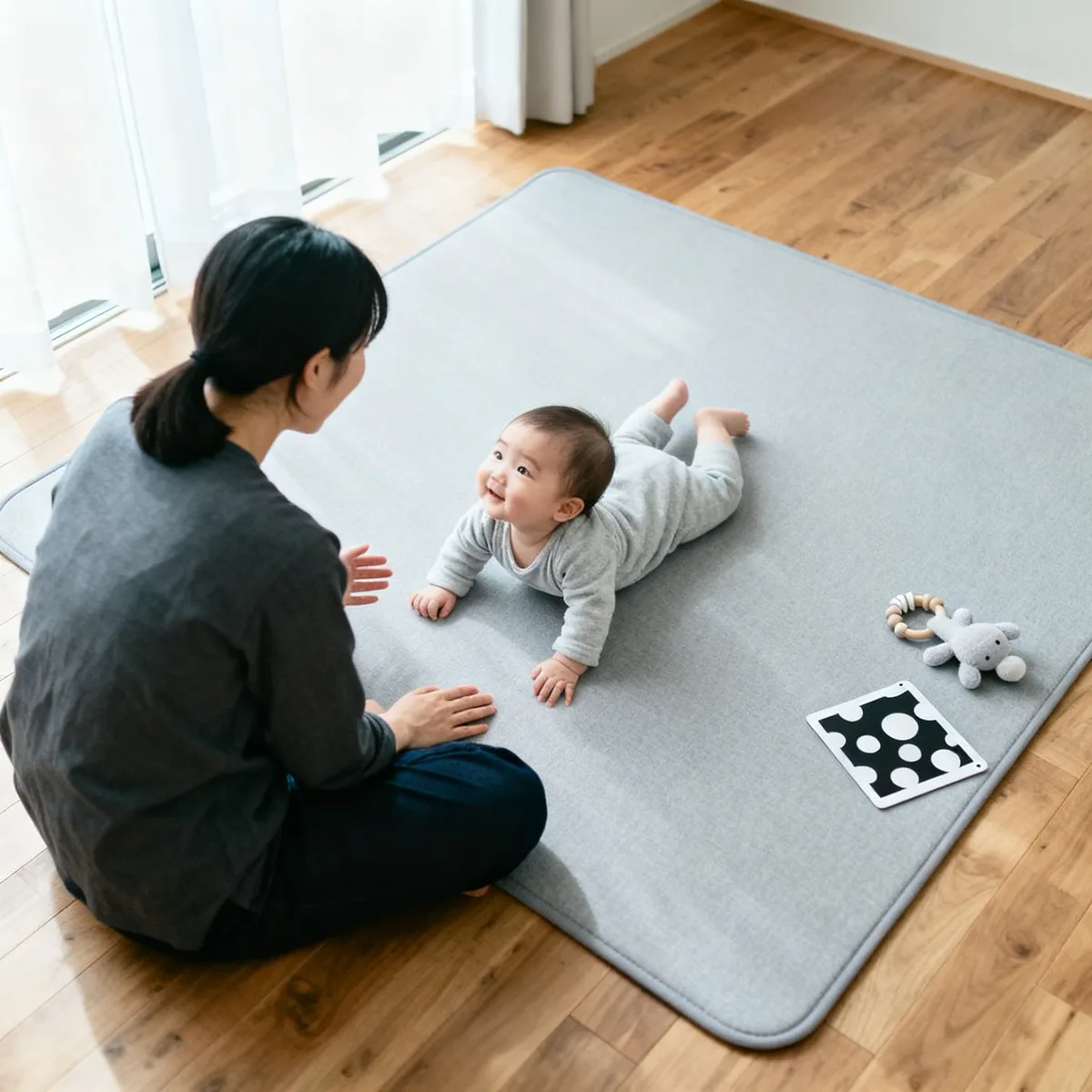
Get down on the floor with them. Your face is the most interesting thing in their world right now. Hold eye contact, talk to them, sing something silly. You’re giving them a reason to lift up.
A simple black-and-white card or high-contrast image placed just in front of them works well too. Newborns can only focus about 8–12 inches out, so keep it close. It gives their eyes something to track, which encourages that little head lift.
If you want to understand how this fits into the wider picture of early development, the newborn care tips we’ve put together go deeper into what’s actually happening in those first weeks — and why the small stuff matters more than it looks.
Short sessions. Consistent days. That’s the whole strategy right now.
By three months, something shifts. Your baby is more alert, more curious, and honestly — a little more fun to play with.
This is when tummy time stops being just a chore and starts becoming actual interaction. And that changes everything, for both of you.
The simplest thing you can do is get down on the floor with them. Face-to-face. Talk to them, make silly sounds, let them lock eyes with you. Your face is still the most interesting thing in their world — use that.
High-contrast books or cards placed just in front of them encourage tracking. Move a toy slowly from side to side and watch their eyes follow. That’s not just cute — that’s real visual development happening in real time.
soft rattles They’re starting to connect cause and effect. They hit it, it sounds. They do it again. That’s their brain working hard.

A small mirror propped in front of them is another one worth trying. Babies this age are fascinated by faces, even their own. It motivates them to hold that head up longer than almost anything else.
If you want to weave more intentional play into your days, baby sensory activities broken down by month can give you a real roadmap — so you’re not guessing what’s actually developmentally appropriate.
Around four to five months, you’ll notice them starting to push up through their arms, maybe rocking a little. That’s the groundwork for rolling. Keep the sessions short enough that they stay engaged, not frustrated.
Follow their lead. If they’re done, they’re done. Tomorrow is another chance.
Once you hit the six-month mark, the game changes. Your baby isn’t just tolerating being on their belly anymore — they’re starting to use it.
This is where play gets to do the real work. You’re not just doing tummy time to check a box. You’re building the strength and coordination that leads directly to crawling.
Place a toy just out of reach and watch what happens. They’ll reach, strain, maybe pivot their whole body trying to get there. That pivot — that little half-circle scoot — is huge. It’s their first taste of intentional movement.
Roll a ball slowly away from them. Something with texture or a little noise works well. The tracking pulls their head up, their arms engage, and suddenly they’re problem-solving from the floor.
Sit across from them and call their name. Make eye contact. Let them work toward you. You are genuinely their favorite destination — use that.
Tunnels and low obstacles made from rolled blankets or a nursing pillow give them something to navigate around or climb over. It looks like chaos. It’s actually core work.
Mirror play is underrated at this age. Prop a baby-safe mirror in front of them on the floor. That baby in the reflection is fascinating — and confusing in the best way. Understanding object permanence baby development helps you see exactly why this kind of face-to-face play matters so much right now.
Keep checking that anything within reach is safe. Babies on the move find things you forgot were there. A quick floor-level scan before each session is worth the thirty seconds.
By ten or eleven months, some babies are rocking on all fours. Some are doing a commando crawl. Some go straight to pulling up. There’s no single right sequence. What matters is that they’re moving — and that you gave them the space to figure it out.
Here’s the truth: a baby staring at the floor has no reason to stay there. You have to give them something worth lifting their head for.
Get down on the floor with them. Your face — right at their level — is still the most compelling thing in their world. Talk, sing, make ridiculous sounds. It works better than any toy.
Mirrors are magic for this age. A small, unbreakable mirror propped in front of them gives them a “friend” to look at. Babies don’t know it’s themselves yet, and honestly, that makes it even better. They’ll hold that head up longer than you’d expect.
Texture matters more than you think. A folded towel, a silicone mat, a soft ribbed blanket — different surfaces under their hands and chest keep their nervous system engaged. You’re not just building neck strength. You’re giving them a full sensory experience.
Crinkle toys, high-contrast books propped open, or a simple rattle just out of reach — these are your tools for tummy time activities that actually hold their attention. The slight frustration of reaching is part of the point. That’s what builds the drive to move.
Singing works too, especially if you move around while you do it. When your voice shifts position, they track it. Their eyes pull their head. Their head pulls their shoulders. It’s all connected.
As they get older and more mobile, you can layer in more — scarves, soft balls, stacking cups just within reach. The goal shifts from “hold your head up” to “figure out how to get that thing.” That curiosity is what keeps them going. And honestly, watching them work it out? That part never gets old.
If your baby screams every single time you put them on their belly, I want you to know — that’s not a you problem. That’s just a very normal baby problem.
A lot of babies hate tummy time at first. They’re not being difficult. They’re working muscles they’ve never used before, and it’s genuinely hard for them.
The first thing I’d check is timing. Tummy time right after a feed? Disaster. Too tired? Also a disaster. The sweet spot is awake, alert, and at least 30 minutes after eating.
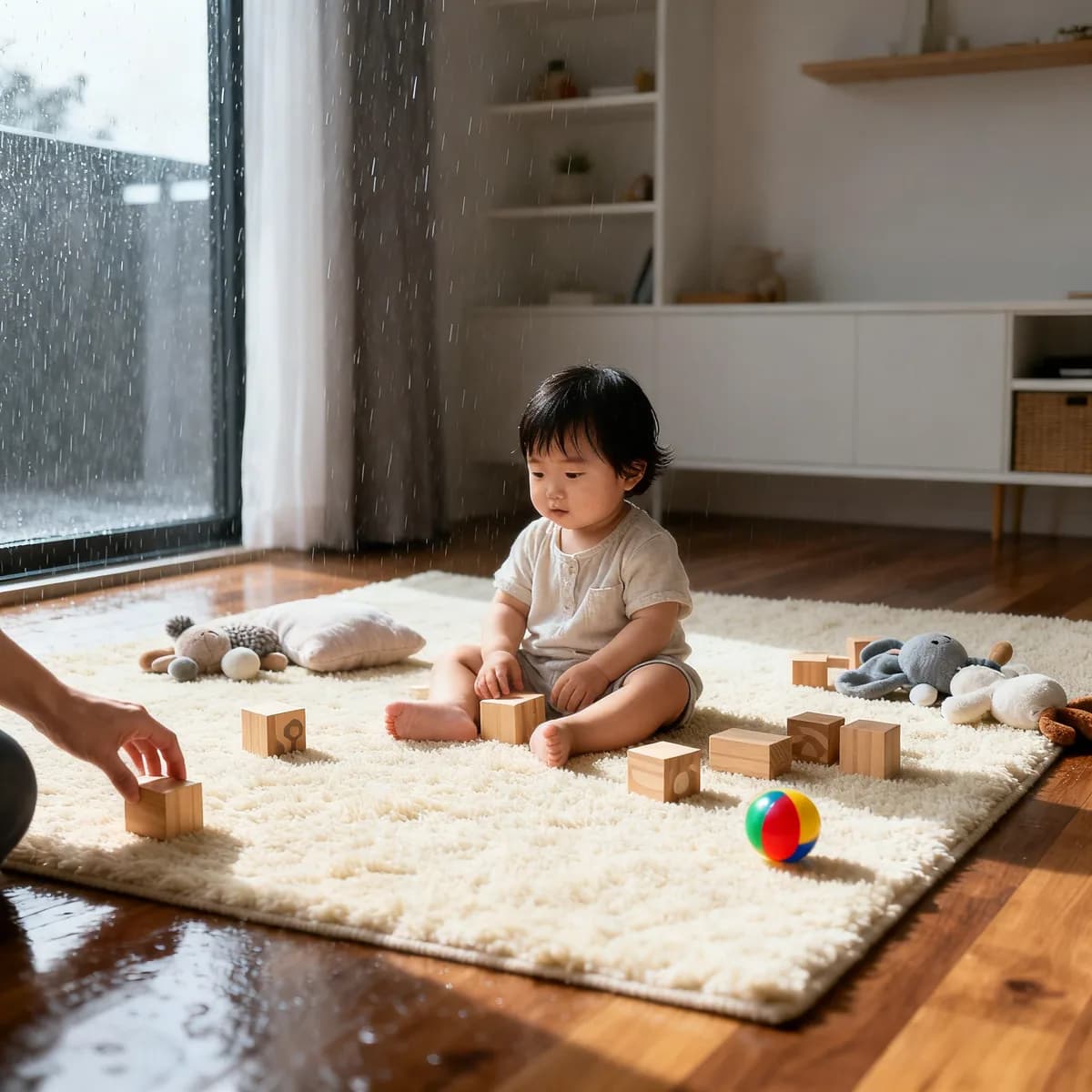
If flat-on-the-floor is a hard no, start on your chest. Baby belly-down on your chest while you recline counts. It’s still building the same muscles. It’s still doing the work.

You can also try rolling a small towel or a firm pillow under their chest, just below the armpits. That little lift takes some of the pressure off and makes it feel less like a face-plant waiting to happen.
Keep sessions short. We’re talking 30 seconds to start. Get down on their level — your face close to theirs. That alone changes everything for some babies. They’d rather be looking at you than staring at carpet.
Some tummy time activities work better than others for resistant babies. A small mirror flat on the floor in front of them? Genuinely magical. They will hold that head up to look at themselves longer than you’d expect.
If separation anxiety in babies is already showing up, tummy time on the floor alone will go badly. Get down with them. Make it a together thing, not a dropped-off-and-left thing.
The goal isn’t suffering through it. The goal is slowly building tolerance until it’s just a normal part of the day. That happens gradually — and it does happen.
Here’s the thing that trips a lot of people up: tummy time is for awake, supervised time only. The moment your baby falls asleep on their belly, you move them to their back. Every single time.
The AAP recommends that babies always sleep on their backs to reduce the risk of SIDS — and that rule doesn’t bend, even if your baby seems to sleep more peacefully face-down.
If you want to go deeper on the why behind that, the full breakdown of SIDS risk factors is worth a read. Knowing the reasons makes it easier to stay consistent when you’re exhausted and tempted to just leave them.
Surface matters too. A firm, flat floor is your safest bet for tummy time activities. Soft surfaces — think mattresses, cushions, thick blankets — increase the risk of suffocation because a young baby doesn’t yet have the strength to lift or turn their head reliably.
Keep the area clear. No loose blankets, no stuffed animals, nothing within reach of their face.
Your chest counts as a surface too, and it’s a great one — but you need to be sitting upright or reclined at an angle, not lying flat yourself. If you drift off, that setup becomes unsafe fast.
Watch their positioning. You want their arms forward, elbows roughly under their shoulders. If their arms are tucked under their body, gently adjust them. That positioning helps them push up and makes the whole thing more comfortable — which means they’ll tolerate it longer.
And stay close. Not hovering anxiously, but present. Tummy time should feel like connection, not a test they’re taking alone.
The AAP recommends starting supervised tummy time from your first day home from the hospital. Begin with just one to two minutes, two or three times a day — that’s plenty.
As your baby grows, gradually increase duration: by 3 months, aim for a few minutes several times daily; by 6 months, work toward longer stretches as your baby becomes stronger. The goal is consistency, not duration.
Crying during tummy time is completely normal, especially in the first weeks. It doesn’t mean you should skip it — it means you adjust the approach. Try shorter sessions, place your baby on your chest instead of the floor, or add engaging activities like mirrors or singing.
If your baby is genuinely distressed, take a break and try again later. The key is building tolerance gradually without force.
Watch for milestones like head lifting (around 1–2 months), sustained head control (3–4 months), rolling (4–6 months), and pivoting movements (6–8 months). Each age has clear markers of increasing strength and control.
If you notice your baby lifting their head higher, spending longer on their belly comfortably, or attempting to roll, that’s tummy time working. Share observations with your pediatrician if you’re concerned about developmental progress.
No — always place your baby on a firm, flat surface like a play mat on the floor or a firm cushioned play pad. Soft surfaces like beds and couches increase the risk of suffocation and don’t give your baby the stable support they need to build strength effectively.
Keep the environment clear of pillows, blankets, and toys they could roll into. Supervision is essential.
High-contrast black-and-white cards work well for newborns (they can only focus 8–12 inches away). As your baby grows, try mirrors, textured toys, crinkly toys, and toys with different colors and sounds.
Rolled towels or small pillows under the chest provide gentle support for younger babies. The best prop is often your face and voice — direct engagement is always more motivating than any toy.