

Buying Guides
Best Portable High Chair for Travel: Reviews & Buying Guide for On-the-Go Feeding
Soyeon Park·11 min read

Silicone vs plastic baby plates: which is actually safer? Compare chemical leaching, heat safety, and durability. Here's the evidence-backed verdict for toddlers.
POV: You’re standing in the baby section staring at two plates that look nearly identical — one silicone, one plastic — and the price difference is making you wonder if the safety difference is real or just marketing.
Here’s what matters: plastic baby plates can leach chemicals like BPA, BPS, and BPF into food, especially when heated. Silicone doesn’t contain these compounds at all, which is why silicone vs plastic baby plates safety has become a real concern for parents feeding toddlers multiple times a day.
This guide breaks down the actual chemical and safety differences, cuts through the certification noise, and tells you which material is genuinely safer — and when plastic might still be acceptable.
Here’s the core issue with plastic baby plates: they can leach chemicals into food, and heat makes it worse.
BPA was the first red flag. Once manufacturers pulled it, they replaced it with BPS and BPF — structurally similar compounds that research suggests may carry similar hormonal disruption risks. Swapping one bisphenol for another isn’t exactly the win it was marketed as.
The FDA recommends avoiding putting plastic containers not labeled microwave-safe in the microwave, because heat accelerates chemical transfer into food. For a baby eating warm meals multiple times a day, that exposure adds up.
Silicone behaves differently at a molecular level. It’s an inorganic polymer — meaning it doesn’t contain the carbon-based chemical structures that make plastics reactive to heat, acid, or fat. When you’re comparing silicone vs plastic baby plates safe for everyday use, this stability is the actual differentiator.
Food-grade silicone doesn’t leach bisphenols because it doesn’t contain them. It also doesn’t degrade the same way plastic does — no micro-cracking from repeated dishwasher cycles, no surface breakdown that increases chemical exposure over time.
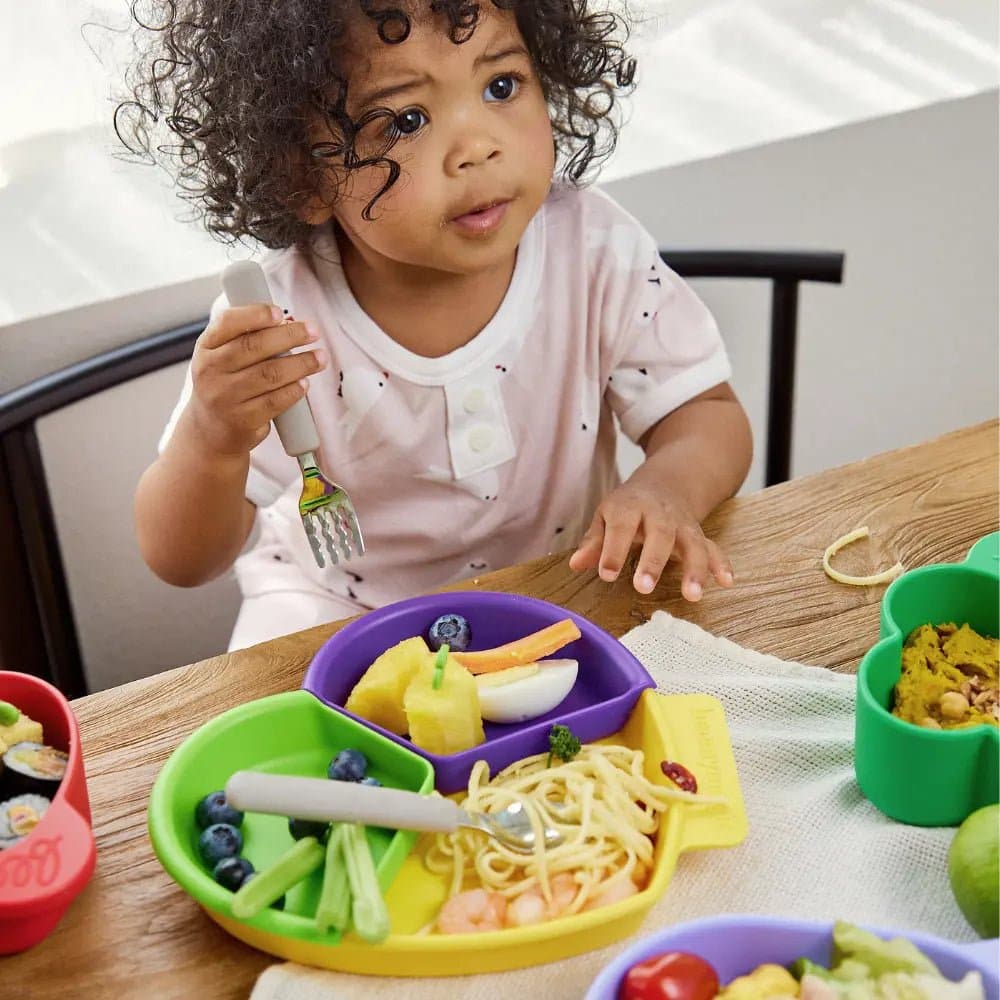
The Grosmimi Little Silicone Suction Food Plate at Onzenna is made from 100% food-grade silicone — no fillers, no BPA, no BPS or BPF substitutes.
One thing worth knowing: silicone quality varies. “Food-grade” has a definition, but not all manufacturers meet the same standard. If a silicone product smells chemical or leaves residue after washing, that’s not normal — and it’s worth paying attention to.
If you’re also thinking through other kitchen hazards at this stage, the baby proof kitchen guide covers what else tends to get overlooked.
Heat is where the difference between these two materials gets real.
Plastic degrades when exposed to heat repeatedly. The structure breaks down — and as it does, chemical compounds can migrate into food. The FDA has flagged this specifically for BPA, noting that exposure during early development may affect the brain and behavior of infants and young children.
Even BPA-free plastics aren’t a clean pass. Many use BPS or BPF as substitutes, and early research suggests similar concerns. Heat accelerates the process regardless of which plastic variant you’re dealing with.
Silicone handles heat differently. Food-grade silicone is stable up to around 400°F — it doesn’t break down, leach, or warp under normal feeding and cleaning conditions. That includes microwaving and dishwasher cycles that would visibly age a plastic plate within months.
That said, microwaving in silicone still has a caveat: the plate itself stays safe, but it can get hot. Always check the food temperature before it reaches your baby, not just the plate’s surface.
For dishwashers, the story is similar. Silicone holds up on top rack and bottom rack. Plastic is usually rated top rack only — and even then, repeated high-heat cycles wear it down faster than hand washing would. You’ll see it in the warping and discoloration before you see it in the chemistry.
When you’re working through the broader question of whether silicone vs plastic baby plates are safe for everyday use, heat tolerance is the most practical place to start. It’s the variable you interact with at every single meal.
If you’re also navigating the wider feeding setup, the high chair buying guide is worth reading alongside this — what your baby eats off of and where they eat it both matter.
Short answer: yes, but not infinitely. Silicone holds up to daily punishment — dropping, dishwashing, stacking, and the general chaos of a toddler’s relationship with objects — without cracking or going brittle over time.
Plastic degrades more visibly. It scratches. Those scratches trap food and bacteria in ways that are hard to clean out completely. Over months of use, cheap plastic plates often warp, stain permanently, and start looking like they belong in a bin.
Silicone doesn’t stain easily, doesn’t crack, and keeps its shape through temperature extremes that would wreck most plastic alternatives. A quality silicone plate can realistically last through multiple kids with no structural change.

The environmental math follows from there. Fewer replacements mean less waste. If you’re buying plastic plates every six months because they’ve degraded past the point of usefulness, the disposable economics add up fast — and so does the landfill contribution.
There’s one caveat worth naming: silicone can absorb strong odors and oils over time, especially if it’s lower-grade. High-quality food-grade or platinum silicone resists this significantly better than the cheap stuff. This is also where the ongoing silicone vs plastic baby plates safe conversation has a durability layer people often skip — degraded materials, whether warped plastic or compromised silicone, aren’t just ugly. They’re worth replacing.
If your baby has sensitive skin that reacts to everything, the material contact question matters even more. The same logic that applies to baby eczema treatment — reduce unnecessary irritants, favor inert materials — applies here too.
Durability isn’t just a convenience argument. It’s a quality argument. Better materials held together longer is a better outcome on every level.
This is the one that makes parents pause. Silicone looks soft and flexible — does that mean it’s hiding bacteria in every fold?
Here’s what actually matters: intact silicone is non-porous. Bacteria need somewhere to live, and a smooth, sealed silicone surface doesn’t give them much to work with.
The problem isn’t silicone’s texture. It’s damage. Once silicone develops cuts, tears, or deep scratches — usually from sharp utensils — those grooves become real hygiene risks. That’s where bacteria get a foothold.
Plastic has the same vulnerability, just faster. Plastic scratches more easily than silicone, and those micro-scratches accumulate quickly with daily use. A plate that looks clean can have a surface full of tiny harbors that a regular rinse won’t reach.
When researchers and health organizations weigh in on the switching baby formula… actually, the more relevant comparison here is material integrity under repeated cleaning. The FDA recommends against using plastic feeding items that show visible wear, warping, or scratching — damaged surfaces are harder to fully sanitize regardless of the material.
For silicone, dishwasher-safe ratings matter. High-heat cleaning is your best tool, and most food-grade silicone handles it without degrading.
For plastic, check that it’s rated for the cleaning method you’re actually using. Many aren’t. Hand-washing in hot soapy water is often the safer default if the dishwasher rating isn’t confirmed.
Bottom line on the silicone vs plastic baby plates safe debate: neither material is inherently germ-ridden. Both become hygiene issues when they’re worn down and you keep using them anyway.
Inspect plates regularly. If you’re seeing grooves, discoloration, or surface damage — that’s the real signal to replace, not the material itself.
“BPA-free” sounds like a guarantee. It isn’t.
BPA (bisphenol A) was removed from most baby products after research linked it to hormonal disruption. But manufacturers replaced it with BPS and BPF — structurally similar chemicals that early studies suggest carry similar risks. The label changed. The concern didn’t necessarily go away.
“Food-grade” is another one that sounds more official than it is. It means a material won’t acutely poison your child in a single exposure — not that it’s been tested for long-term safety under heat, repeated washing, or daily wear.
The FDA recommends avoiding putting plastic containers in the microwave unless they’re explicitly labeled microwave-safe, because heat accelerates chemical migration into food — even from plastics that passed food-grade testing at room temperature.
Third-party certifications add a layer, but they’re not all equal. CPSIA compliance means a product was tested for lead and phthalates — important, but a narrow list. FDA food contact approval covers a broader range of materials but doesn’t test every product individually. It tests material categories.
What actually matters: look for certifications from independent labs, not just brand claims. A product that cites CPSIA, FDA food contact standards, and an independent third-party test result is meaningfully different from one that just says “non-toxic” on the packaging.
This is exactly where the silicone vs plastic baby plates safe conversation gets complicated — because both materials can carry certifications and both can be sold with vague marketing language that tells you almost nothing useful.
When you’re evaluating any feeding product, ask: who tested it, what specifically did they test for, and is that documentation publicly available? A brand that can’t answer that clearly is telling you something too.

There’s no universal answer. But there is a right answer for your specific situation — and it’s not hard to find once you drop the guilt about plastic entirely.
If your baby is under 12 months and you’re heating food in the plate or using it daily for purees, silicone is the cleaner call. Less surface degradation, no leaching risk under heat, easier to sanitize thoroughly.
If you’re in the thick of toddler chaos — car seats, park lunches, daycare bags — BPA-free, certified hard plastic is genuinely fine. It survives drops. It doesn’t get funky in the bottom of a bag. For a road trip with baby, plastic plates are the practical choice and there’s no shame in that.
Budget is a real factor too. Silicone costs more. If you’re stretching to cover the full feeding setup, prioritize silicone for the items that see heat — bowls, spoons — and use certified plastic for everything else.
Lifestyle matters just as much as material. A family that eats mostly at home, runs the dishwasher daily, and replaces worn items regularly is using both materials safely. A family with inconsistent washing routines or older plates that have been through years of scratching should probably swap out the plastic regardless of the original certification.
If you want a set that actually holds up without overthinking it, Beemymagic is worth looking at — the kind of thing you’d recommend to a friend who doesn’t want to research this for three hours.
Bottom line: silicone is the safer long-term investment for everyday home use. Plastic isn’t the villain — degraded, uncertified, or heavily scratched plastic is. Know the difference and you’re already ahead of most of the noise on this topic.
Once you’ve done the research on silicone vs plastic baby plates safe options, the next question is obvious: which silicone actually delivers?
Not all silicone is equal. Food-grade, platinum-cured silicone is what you’re looking for — it’s the version that’s been through more rigorous testing, holds up to repeated sterilization, and doesn’t break down into your child’s food over time.
Beemymagic tableware is built to that standard. The plates are designed with suction bases that stay put during the chaos of early self-feeding, walls high enough to actually contain food, and a material that handles both the dishwasher and the microwave without warping or degrading.
That last point matters more than it sounds. Degradation is where safety risk actually lives. A plate that keeps its integrity after 300 washes is doing something most parents never have to think about — because it’s already handled.
If you’re building out a feeding setup for the first time, Beemymagic’s full tableware collection is the kind of thing you’d quietly recommend to every parent you know who’s currently spiraling on Amazon reviews at midnight.
Design matters too. Divided plates reduce mealtime standoffs. Softer edges are gentler on gums during teething. Bright, simple colors aren’t just cute — they’re genuinely useful for keeping a distracted baby focused on the food in front of them.
And if you’re in the thick of navigating daycare transitions and packing lunches for the first time, thinking through baby separation anxiety daycare alongside what goes in the bag is the kind of practical prep that actually reduces stress.
The plate isn’t the whole picture. But starting with one that won’t give you a reason to second-guess it? That’s a solid place to land.
BPA-free doesn’t mean chemical-free. Most manufacturers replaced BPA with BPS or BPF, which have similar chemical structures and early research suggests comparable hormonal concerns. The safer approach is to limit plastic plates altogether, especially for warm food and frequent microwave use.
Yes. Food-grade silicone is chemically stable up to around 400°F and doesn’t leach or degrade in the microwave or dishwasher. Always test the food temperature before serving, as the plate itself may get hot.
Silicone can stain visibly (especially from turmeric or tomato), but staining is cosmetic, not a hygiene issue. The material doesn’t harbor bacteria in stains. Regular washing with warm soapy water or the dishwasher keeps silicone plates fully sanitary.
Food-grade certification is meaningful and regulated, but quality varies by manufacturer. BPA-free is less reliable because it doesn’t account for replacements like BPS or BPF. Look for third-party testing (like FDA or CPSIA compliance) and avoid products with chemical smells.
You can introduce silicone plates at any age — even for babies starting solids around 6 months. Silicone doesn’t pose the chemical leaching risks of plastic. The transition is about preference and your family’s needs, not safety milestones.