

Buying Guides
Best Portable High Chair for Travel: Reviews & Buying Guide for On-the-Go Feeding
Soyeon Park·11 min read

Korean baby snacks are cleaner, simpler, and better staged than most. Here's what to look for at 6m, 9m, and 12m+ — and the brands actually worth buying.
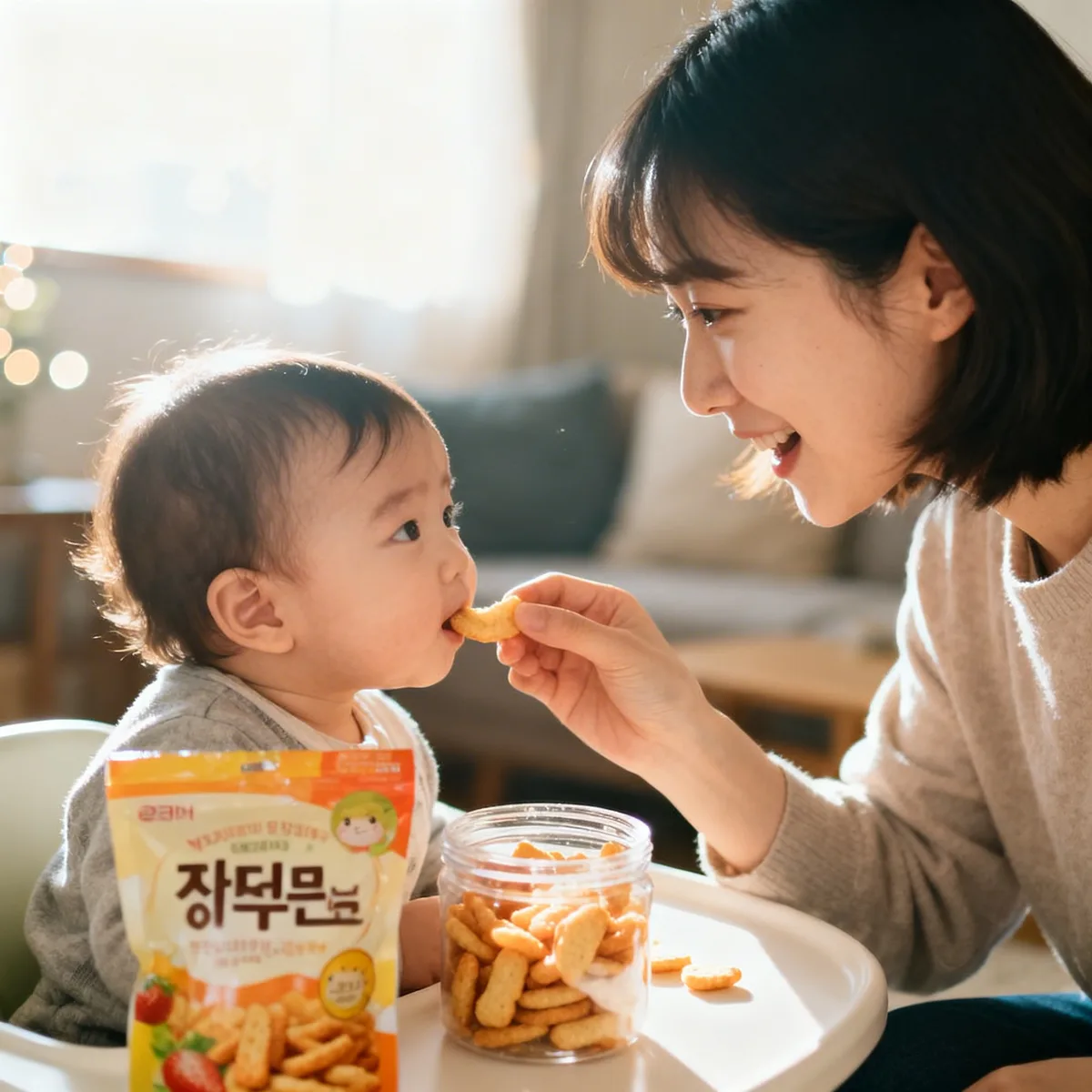
Most Western baby snack labels read like a chemistry exam — and “natural flavors” doesn’t mean what you think it means. Meanwhile, Korean baby snacks have been built around a completely different formulation philosophy: rice-based, staged by developmental age, shorter ingredient lists, lower sodium. The Korean baby food market is one of the most rigorously self-regulated in the world — not because of government mandates alone, but because Korean parents demand it and brands compete on purity. This guide covers what makes Korean baby snacks different, what to look for at each stage (6 months, 9 months, 12 months and up), and how to compare the options so you stop standing in aisles guessing.
It’s not hype. The formulation philosophy is genuinely different. Most mainstream Western baby snacks are corn- or oat-based, and a significant number contain added sugars, synthetic flavors, or preservatives that have no business being in a six-month-old’s body. Korean baby snacks lean heavily on rice — specifically short-grain white rice and organic brown rice — because rice is one of the least allergenic grains and dissolves quickly in the mouth, which matters enormously when your baby is still figuring out how to chew.
The texture engineering is also more intentional. Korean puffs and rice crackers are designed to melt on contact with saliva, reducing choking risk. That’s not accidental — it’s a function of how the grain is processed and expanded. Compare that to some Western teething biscuits, which can break into hard shards, and the difference is pretty stark.

Beyond ingredients, Korean baby snack brands stage their products with specificity. You’ll see age markers that actually mean something — 6 months, 8 months, 12 months — tied to texture, salt content, and allergen exposure rather than arbitrary marketing. For parents navigating the introduction of solids, that kind of guidance is genuinely useful.
At six months, babies are just beginning to explore solids. The AAP recommends introducing single-ingredient foods first to make it easier to identify potential allergens — and that principle applies directly to snack choices too. You want snacks with minimal ingredients, zero added sugar, and textures that dissolve instantly.
For this stage, look for:
Avoid anything with honey (botulism risk under 12 months), whole nuts, or added sugars — including fruit juice concentrate, which is just sugar wearing a health halo.
By nine months, most babies have developed a pincer grasp — they can pick up small pieces between thumb and forefinger — and they’re ready for snacks that offer slightly more texture and complexity. This is when Korean baby snack stages really start to shine, because the 8–9 month range products are designed to challenge developing motor skills without being a choking hazard.
For this stage, look for:

This is also a good stage to start introducing snacks alongside water in an open cup or straw cup, which supports the transition away from bottle-feeding that the AAP recommends beginning around 12 months.
Toddler snacks get more interesting — and more chaotic. By 12 months, babies are working on self-feeding, flavor preferences are forming fast, and the snack options expand significantly. Korean brands typically introduce more complex flavors at this stage: seaweed, mild soy, sesame, fermented grain bases. These aren’t just more interesting — they’re introducing umami and savory complexity that helps kids develop less sugar-dependent palates, which is a genuinely big deal long-term.
For this stage, look for:
Here’s a quick breakdown of how to think about Korean baby snack categories when you’re shopping:
If you’re starting solids and want a concrete starting point for the 6m+ stage, the Na
Most Korean baby snacks like seaweed strips and rice crackers are safe for 8+ months when they’re soft or dissolve easily, but always check the ingredient list for allergens and choking hazards like whole nuts.
Dried seaweed (gim), rice crackers, and frozen rice puffs are great options because they’re soft enough to gum but provide gentle pressure relief on sore gums.
Some do, but many Korean brands specifically make unsalted and unsweetened options—always read labels since salt and sugar content varies widely between brands.