

Buying Guides
Best Portable High Chair for Travel: Reviews & Buying Guide for On-the-Go Feeding
Soyeon Park·11 min read

Chalkboard, whiteboard, or magnetic? Here's the honest breakdown of the best kids easel for home — so you stop second-guessing and start creating.
POV: You’ve opened a new tab to look up “best kids easel” and now you’re forty minutes deep into a Reddit thread, three browser tabs are open, and you still don’t know if you want chalkboard, whiteboard, or magnetic. Meanwhile your toddler is drawing on the actual wall. Cool. Let’s fix this.
The kids easel chalkboard vs whiteboard debate sounds like a small decision. It isn’t. The surface your kid draws on affects how often they actually use it, how easy cleanup is for you, and whether it becomes a beloved fixture in your home or a dust magnet in the corner. Here’s everything you need to know — no fluff, no sponsored ranking lists.
Before we get into surfaces, let’s talk about why an easel is worth the floor space in the first place. Open-ended art play — the kind where there’s no right answer and no finished product to perform — is legitimately important for early development. Research from the American Academy of Pediatrics links creative play with advances in problem-solving, fine motor skills, and emotional regulation in children ages 2–6.
An easel makes that kind of play more accessible because it’s always there. It’s not a craft kit you have to set up and put away. It’s not screen time you have to negotiate. It’s a standing invitation. Kids who have a dedicated creative space tend to use it more independently — which, honestly, is the real win here.
So yes, the surface type matters. But the bigger point is: having something is better than having nothing, and having the right something is better than buying twice.
The chalkboard surface is the original. It’s been in classrooms and playrooms for over a century because it works. Here’s the honest pros and cons list.
Why it’s great:
The real talk:
Best for: Kids who love sensory feedback, homes with a more minimal aesthetic, parents who don’t want to manage marker caps.
If your kid is obsessed with color — like, refuses to draw in anything but maximum saturation — the whiteboard surface is going to make them happier. Dry-erase markers on a good whiteboard pop. The drawings look vibrant, the erasing is instant, and there’s something very satisfying about that squeaky wipe.
Why it’s great:
The real talk:

Best for: Older toddlers and preschoolers who are into detailed drawing, color-mixing play, or kids doing letter and number work who need sharp contrast.
Most kids easels today are double-sided — chalkboard on one side, whiteboard on the other. But some also add a magnetic surface, either built into the chalkboard side or as a separate panel. This is where things get genuinely useful.
A magnetic easel surface lets you clip up artwork, add magnetic letters for spelling games, use magnetic tiles for pattern play, or attach a paper roll holder with a magnetic clip. It’s less about the magnets themselves and more about turning the easel into a system — a space that does more than just drawing.
Why it’s great:
The real talk:
Best for: Parents who want the easel to grow with the child, support literacy play, and function as more than just a drawing station.
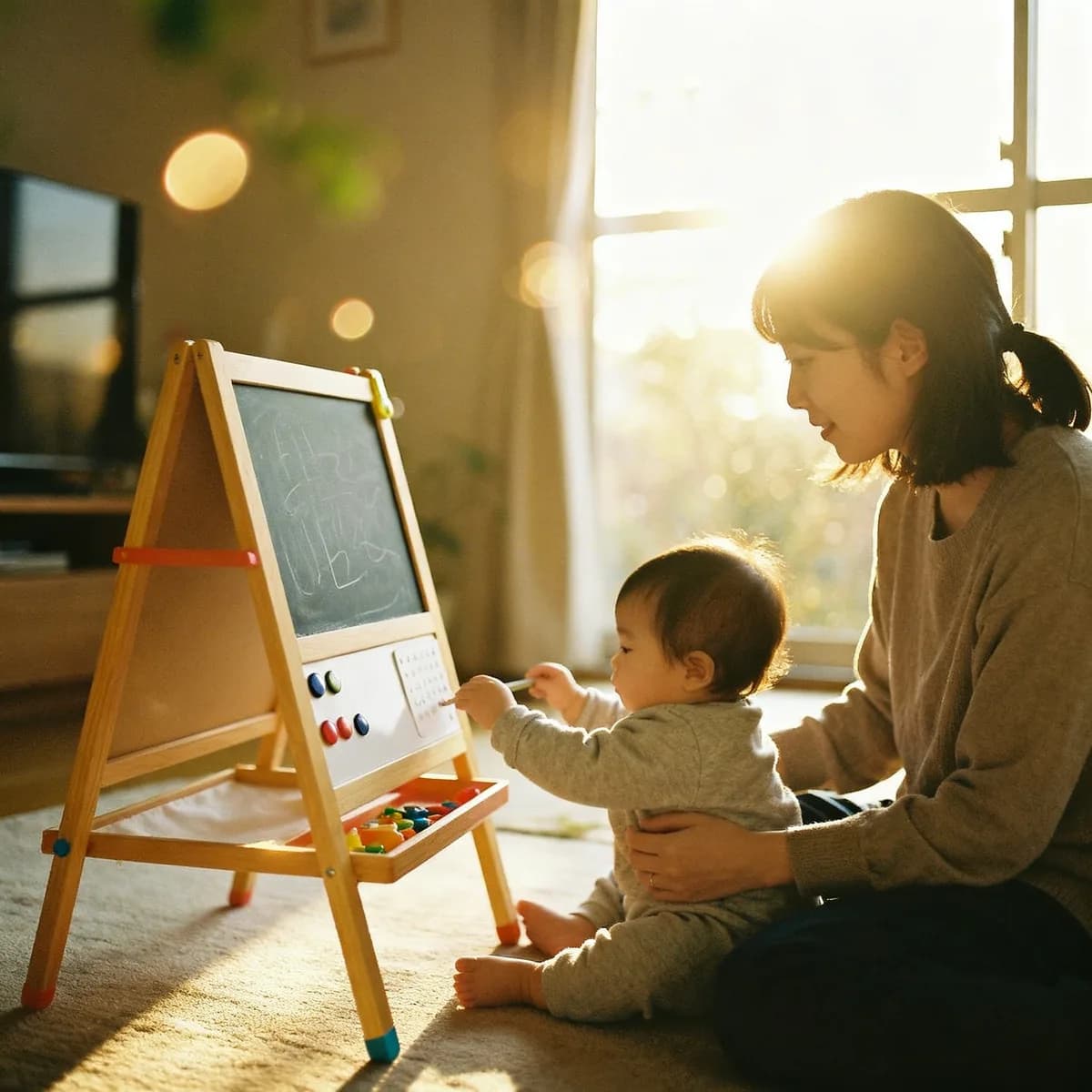
This comes up constantly, and the honest answer is: earlier than most people think. Toddlers as young as 18 months can use a low-set easel with chunky chalk or large crayons — the upright surface actually helps develop the wrist extension and shoulder stability that fine motor development depends on. Drawing on a vertical surface uses different muscles than drawing flat on a table, and both matter.
By age 3–4, kids can handle dry-erase markers with supervision, engage with magnetic letters, and start doing intentional drawing and early writing practice. By 5–6, a good easel is basically a homework and creativity station. A quality double-sided easel with magnetic capability can realistically serve a child from 18 months to 7 or 8 years — which makes it one of the better value purchases in the toddler phase.
Beyond the surface debate, here’s what separates a good easel from one that’ll be listed on Facebook Marketplace in six months:
Chalkboards are better for mess tolerance and cost, while whiteboards are easier to clean and less dusty—choose based on your comfort with chalk dust and budget.
Place the easel on a hard floor (not carpet), use a damp cloth for cleanup, and consider a dustless chalk alternative if your kid has respiratory sensitivities.
Toddlers 18 months and up can use an easel with supervision, but kids 2-3+ get the most value since they can actually hold chalk or markers and draw intentionally.