


Health Guides
Tongue Tie in Babies: Signs, Diagnosis, Treatment & Breastfeeding Recovery
Jeehoo Jeon·10 min read

Why cradle cap appears on baby's ears and how to treat it safely. Gentle methods that work without irritating sensitive ear skin.
Here’s what nobody tells you about cradle cap ears: it’s not actually spreading from the scalp — it’s appearing independently because ears are a perfect breeding ground. The warm, moist folds behind and inside your baby’s ears create an ideal environment for the same yeast and sebum buildup that shows up on the scalp. Once you understand why ears are so vulnerable, you can stop treating ear cradle cap like a symptom of something going wrong, and start treating it with the gentle, targeted approach it actually needs.
This guide covers what cradle cap on ears really is, why it appears there, how to treat it safely without irritating delicate ear skin, and when it’s time to call your pediatrician.
Cradle cap is the common name for infantile seborrheic dermatitis — a skin condition that causes flaky, scaly, sometimes yellowish or waxy patches on a baby’s skin. It’s driven by an overproduction of sebum, the skin’s natural oil, combined with the presence of a naturally occurring yeast called Malassezia. Neither of those things is unusual or harmful. The AAP notes that seborrheic dermatitis is one of the most common skin conditions in newborns and typically resolves on its own within weeks to months.
It’s not contagious. It’s not caused by poor hygiene. And it doesn’t indicate that anything is wrong with your baby’s development or immune system.
While the scalp gets most of the attention, cradle cap ears are a frequent finding too — and for straightforward anatomical reasons. The outer ear, particularly the area behind the ear and inside the folds of the ear canal entrance, tends to trap warmth and moisture. That environment is exactly where seborrheic dermatitis thrives. Skin folds create pockets where sebum accumulates, dries, and flakes. Add in the fact that ears are rarely fully dry after bathing or feeding, and you have a textbook setting for this kind of buildup.
The behind-the-ear crease is one of the spots most commonly overlooked during bath time, which means flakes and residue can build gradually before you notice them. That’s not a parenting misstep — it’s just anatomy working the way it does.
If your baby already has flaking in other skin-fold areas, like the neck or armpits, the ears are worth checking too. The same conditions that cause buildup in one fold tend to show up in others. For a broader look at how newborn skin reacts to its environment, korean baby skincare offers a useful lens on gentle, skin-barrier-focused care from the earliest weeks.
Cradle cap doesn’t always stay on the scalp. It begins where sebaceous glands are most concentrated — the top of the head — but those same oil-producing glands exist across the face, behind the ears, and along the eyebrows. When the underlying conditions persist, the flaking follows.
The ears are a natural next stop. The skin behind the ear and inside the ear canal is thin, warm, and often slightly moist from milk, bath water, or simple anatomy. That combination — heat, oil, and limited airflow — is exactly what allows Malassezia, the yeast associated with seborrheic dermatitis, to thrive. Cradle cap in the ears typically appears as yellowish, waxy scaling in the folds behind the ear or along the outer canal. It looks different from eczema or an infection, but because the location is less obvious, it often goes unnoticed longer.
From there, the face is vulnerable for the same reason. The eyebrows, the sides of the nose, and the forehead all have dense sebaceous activity in early infancy. The AAP notes that seborrheic dermatitis in infants most commonly appears in the first weeks of life, coinciding with the peak of maternal hormones passed through the placenta — hormones that directly stimulate oil gland production.
Environmental factors accelerate spreading. Dry indoor air in winter months can disrupt the skin barrier, while excess humidity traps moisture against skin folds. Infrequent washing allows sebum and dead skin cells to accumulate. Overwashing, on the other hand, strips the skin and can trigger a rebound in oil production.
If your baby has sensitive skin more broadly — showing reactions at the diaper area, for example — it’s worth reading up on diaper rash treatment alongside cradle cap care, since both involve barrier skin that needs consistent, gentle management.
The skin behind and around the ears is structurally different from scalp skin. It’s thinner, sits over cartilage rather than bone, and folds in ways that trap heat and moisture. The skin inside the ear canal is especially delicate — it’s self-cleaning by design, and its surface layer is far more permeable than the scalp.
That structural difference matters when you’re treating cradle cap. Standard scalp approaches often involve leaving oil on the skin for several minutes to soften flakes, then using a brush or comb to loosen them. On the scalp, that sequence is manageable. Around the ears, the same process can introduce oil into the ear canal, irritate already-compressed skin folds, or cause maceration — where skin softens and breaks down from prolonged moisture contact.
The AAP recommends using only gentle, fragrance-free products on newborn skin and avoiding inserting anything into the ear canal, which rules out most of the mechanical loosening techniques that work on the scalp.
For cradle cap on ears specifically, safe application zones are the visible outer ear (the pinna) and the skin directly behind the ear where flaking is visible — not the canal entrance or the skin inside folds where airflow is limited. A small amount of oil, applied briefly and wiped away cleanly, is a more appropriate approach here than the longer soak methods used on the scalp. The Cha&Mom line is formulated with exactly this kind of gentle, brief-contact application in mind — worth knowing about if you’re trying to match the right product to the right zone.

If you notice redness, swelling, or discharge from the ear canal alongside scaling, that’s outside the scope of standard cradle cap care. Those signs warrant a call to your pediatrician before any at-home treatment continues.
The skin around and behind the ears is thinner and more reactive than the scalp. That changes how you approach treatment. The goal is loosening flakes without friction, not scrubbing them free.
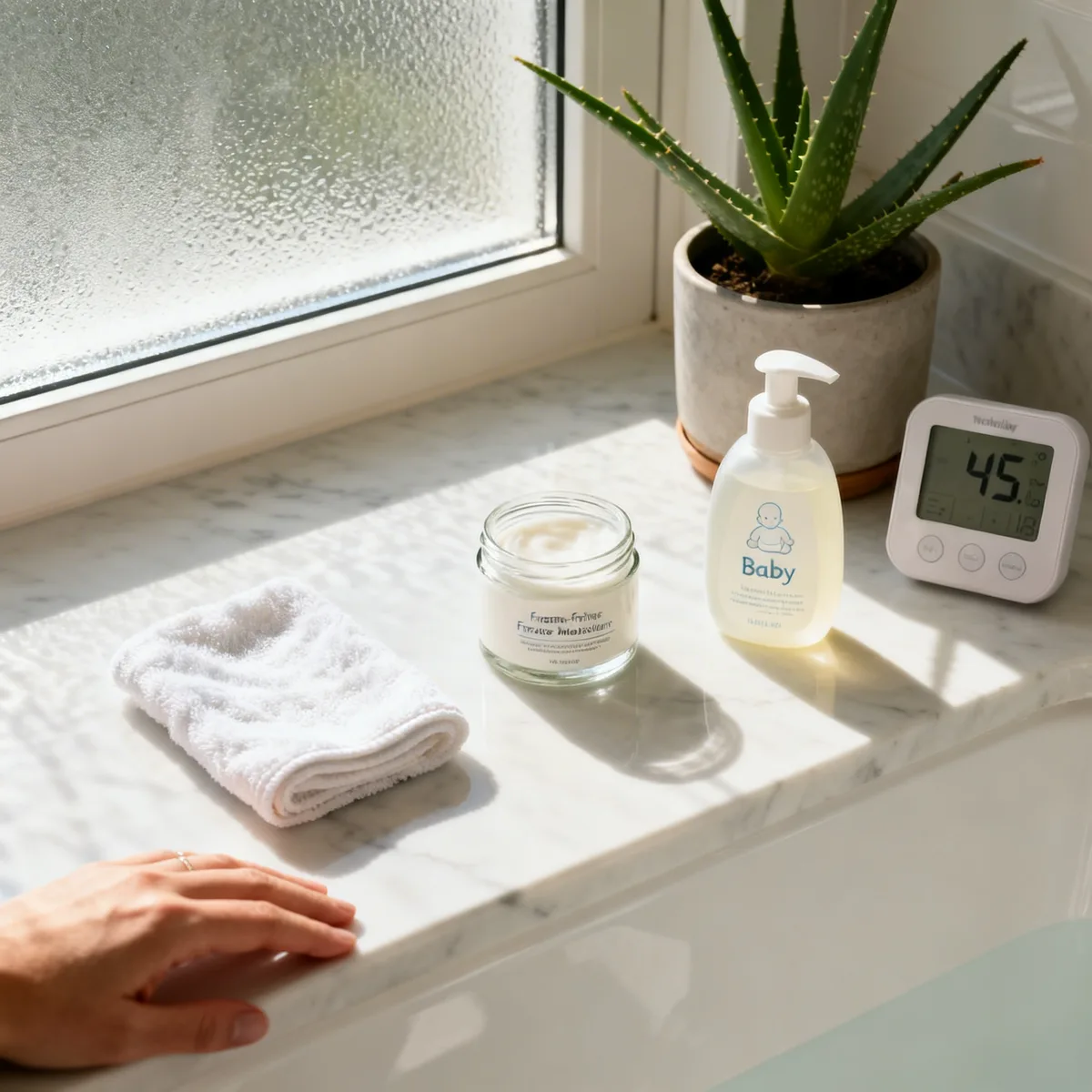
Start with a warm compress. A soft cloth soaked in warm water, held gently against the affected area for two to three minutes, softens the scale before you do anything else. This step alone makes everything that follows easier and less irritating to the skin.
After the compress, a small amount of oil-based moisturizer applied to the scaling area helps break down the buildup. Mineral oil, coconut oil, or a fragrance-free baby oil all work on the same principle — they loosen the lipid-rich crust so it can be gently wiped away. Apply, wait a few minutes, then use a soft cloth or a cotton pad with light, circular pressure. Do not insert anything into the ear canal.
Cleansing comes after the oil, not before. A gentle, pH-balanced wash — applied with a fingertip and rinsed without rubbing — removes oil residue and any loosened flakes. The AAP recommends using only mild, fragrance-free cleansers on infant skin, noting that products with added fragrances or alcohol can compromise the skin barrier in newborns. The Cha&Mom wash is formulated to meet those criteria and is gentle enough for this kind of regular, low-friction routine around sensitive areas.
Consistency matters more than intensity. One gentle session every two to three days typically shows improvement within a few weeks. If the scaling spreads, thickens significantly, or the skin beneath looks inflamed or weepy, that’s the point to loop in your pediatrician. A medicated shampoo or low-potency topical may be appropriate — but that call belongs to a clinician, not a product label.
The scaling looks removable. That instinct to pick or scrub it clean is completely understandable — and almost always makes things worse.
Harsh scrubbing breaks the skin barrier. The AAP notes that a newborn’s skin is significantly more permeable than adult skin, which means abrasion doesn’t just cause irritation — it opens a route for bacteria. Use your fingertip or a soft brush only. No fingernails. No washcloths with any texture.
Dry picking — lifting flakes without softening them first — carries the same risk. The scales attach to live skin underneath. Pulling without preparation can cause minor bleeding and, in rare cases, secondary infection. Always loosen with oil before you attempt any removal.
Over-washing is a less obvious mistake. Washing the affected area daily strips the natural oils your baby’s skin needs to regulate itself. For cradle cap ears specifically, the outer ear canal is self-cleaning — the AAP advises against inserting anything into it, ever. Clean what you can see. Nothing further.
Product choice matters as much as technique. Avoid anything containing fragrance, alcohol, or preservatives like methylisothiazolinone — common in adult and even some “baby” products. The National Eczema Association flags these as frequent irritants in sensitive infant skin. Antifungal shampoos formulated for adults should not be used on infants without pediatric guidance; the active concentrations are not calibrated for newborn skin.
Also worth knowing: more product does not mean faster results. A thin layer of a gentle oil — applied, left to sit, then rinsed — is the protocol. Leaving oil on for extended periods or layering multiple products at once can trap moisture and worsen the environment that feeds the yeast thought to contribute to seborrheic dermatitis. The same principle applies here as it does with bamboo baby towels and newborn skincare broadly — gentler materials and minimal intervention protect more than they compromise.
Most cases of cradle cap on ears resolve with consistent, gentle care at home. But there are specific signs that warrant a call to your pediatrician — and a few that need attention sooner rather than later.
Contact your doctor if you notice any of the following:
Signs of infection. Cradle cap itself is not infectious. If the skin around the ear becomes red, warm, swollen, or starts weeping fluid, that points to a secondary bacterial infection — often from scratching that breaks the skin barrier. Crusting that develops a yellow or honey-colored tint is another indicator. These changes need clinical assessment, not more oil.

Spreading beyond typical zones. Seborrheic dermatitis tends to stay within predictable areas — the scalp, face, and outer ear. If scaling begins to extend down the neck, into the ear canal, or across wider areas of the body, a pediatrician can confirm whether the diagnosis still applies or whether something else is involved, such as eczema or psoriasis.
Severe irritation or persistent crying. Flaking that causes visible discomfort — your baby rubbing their ears frequently, fussiness that seems localized, or disrupted sleep — is worth flagging. The AAP recommends consulting a pediatrician when skin conditions appear to affect an infant’s comfort or daily functioning, rather than waiting to see if symptoms resolve on their own.
No improvement after several weeks of home care. If a consistent routine of softening, gentle removal, and mild cleansing hasn’t produced any change after three to four weeks, a doctor can assess whether a medicated shampoo or low-potency topical treatment is appropriate for your baby’s age and skin condition.
Trust what you observe. You’re the one seeing your baby’s skin every day, and an early conversation with your pediatrician costs less than managing an infection that developed from waiting.
Cradle cap on the ears tends to develop the same way it does on the scalp — sebum builds up, skin cells don’t shed efficiently, and flaking follows. The difference is that the ear area is easier to miss during a routine wash, and moisture from bath time or sweat can linger in the folds, creating conditions where buildup worsens.
A few consistent habits make a real difference. After every bath, gently pat the area around and behind the ears fully dry — don’t rub, just press. Pay attention to the crease where the ear meets the head. That fold traps water more than you’d expect.
For scalp care, a soft brush used daily helps keep skin cells moving before they accumulate. The AAP recommends washing your baby’s hair two to three times per week with a gentle, fragrance-free shampoo — frequent enough to manage oil, infrequent enough not to strip the skin barrier. The Cha&Mom line works well for this kind of regular, low-intervention upkeep — fragrance-free, pH-balanced, and gentle enough to use consistently without stripping.
Avoid applying thick creams or oils inside the ear canal itself. If you’re using an emollient to soften flakes before washing, keep it to the outer ear and surrounding skin only.
Set realistic expectations. The AAP notes that seborrheic dermatitis in infants typically resolves on its own by six to twelve months as hormone levels stabilize. You’re managing it, not curing it. A routine that prevents heavy buildup is the goal — not skin that never flakes.
Consistency matters more than intensity. A gentle, repeatable process done regularly will outperform any single aggressive treatment.
Cradle cap doesn’t technically spread — it appears independently in areas with dense sebaceous glands and moisture. However, if your baby has the underlying conditions that trigger it, you may notice flaking on the eyebrows, sides of the nose, forehead, and neck folds around the same time. This is normal and happens because the same yeast and oil combination exists in those areas too.
Not always. Ear skin is thinner and more sensitive than scalp skin, and the ear canal is a delicate space. Products safe for the scalp can irritate or get trapped in ear folds. Always stick to gentle, fragrance-free oils or cleansers specifically recommended for sensitive areas, and avoid applying anything inside the ear canal. Ask your pediatrician before using any treatment near the ears.
Like scalp cradle cap, ear cradle cap typically resolves on its own within weeks to a few months. Most cases improve significantly by 6–12 weeks with gentle, consistent care. However, some babies experience longer flare-ups or occasional recurrence, especially if environmental factors (heat, moisture, tight clothing) persist.
Cradle cap appears as yellowish or waxy scaling with a greasy appearance, while yeast infections often cause bright red, inflamed skin or oozing. Eczema typically shows as very dry, itchy patches that may crack or weep. If your baby is scratching excessively, showing signs of infection (warmth, swelling, discharge), or the condition isn’t improving after 2–3 weeks of gentle care, contact your pediatrician for diagnosis.