

Buying Guides
Best Portable High Chair for Travel: Reviews & Buying Guide for On-the-Go Feeding
Soyeon Park·11 min read

Searching for the best suction bowls for babies? Here's what actually works — and what ends up on the floor anyway. The real guide for real mealtimes.
POV: You just bought a suction bowl with 400 five-star reviews. You set it down on the high chair tray. Your baby looks you dead in the eyes, grabs the edge, and sends the entire thing — oatmeal and all — directly onto the floor. The suction cup is still on the bowl. It never touched the tray.
Yeah. That’s the thing nobody tells you when you’re shopping for the best suction bowls for babies. The suction rating on the box means nothing if the bowl doesn’t actually bond with your specific tray surface. And most parents only figure that out after the third bowl purchase — and the second outfit change of the morning.
This guide breaks down what actually makes a suction bowl work, what to look for in the material, and which features separate the ones that hold from the ones that just look good in a flat lay. Because your floor has suffered enough.
Before we even get to product features, let’s talk about why the disappointment is so consistent. The #1 reason suction bowls fail is surface incompatibility. Suction only works on a completely smooth, non-porous surface. Textured high chair trays, wooden tables, fabric placemats — none of them create an adequate seal. Even a tiny ridge or a sticker residue on a plastic tray can break the bond entirely.
The second reason? Suction cup placement. A lot of bowls have a single central suction cup. That works fine until your baby pushes from the side — then the leverage snaps the seal in a millisecond. Wider bases with suction around the perimeter hold dramatically better under lateral force, which is exactly the kind of force a nine-month-old applies with shocking enthusiasm.
The third reason is material degradation. Over time — especially with repeated dishwasher cycles — suction cups lose their flexibility and don’t create the same negative pressure they did when new. A bowl that worked brilliantly for three months can suddenly start sliding around. It’s not broken. The silicone has just stiffened slightly. Knowing that lifespan helps you replace before the chaos escalates.
Not all silicone is equal. Here’s what you want to check before you buy:
A six-month-old starting solids has completely different needs from a two-year-old who has opinions. Matching the bowl to the developmental stage isn’t just about size — it’s about what your baby is physically capable of and what behavior you’re trying to support.
6–9 months (early solids): Suction is everything at this stage. Baby isn’t feeding themselves yet — you’re spooning food in — but they are grabbing everything within reach. A low-profile bowl with a wide, strong suction base minimizes the grab-and-launch window. Shallow depth helps you load the spoon without scraping.

9–15 months (self-feeding begins): Now you want a bowl with higher walls and a lip or rim that the spoon can push against for scooping. Research on self-feeding development supports introducing utensils with low-resistance foods during this window — the bowl shape directly supports that skill. The suction still matters because independent feeding means more bowl contact, more lateral force.
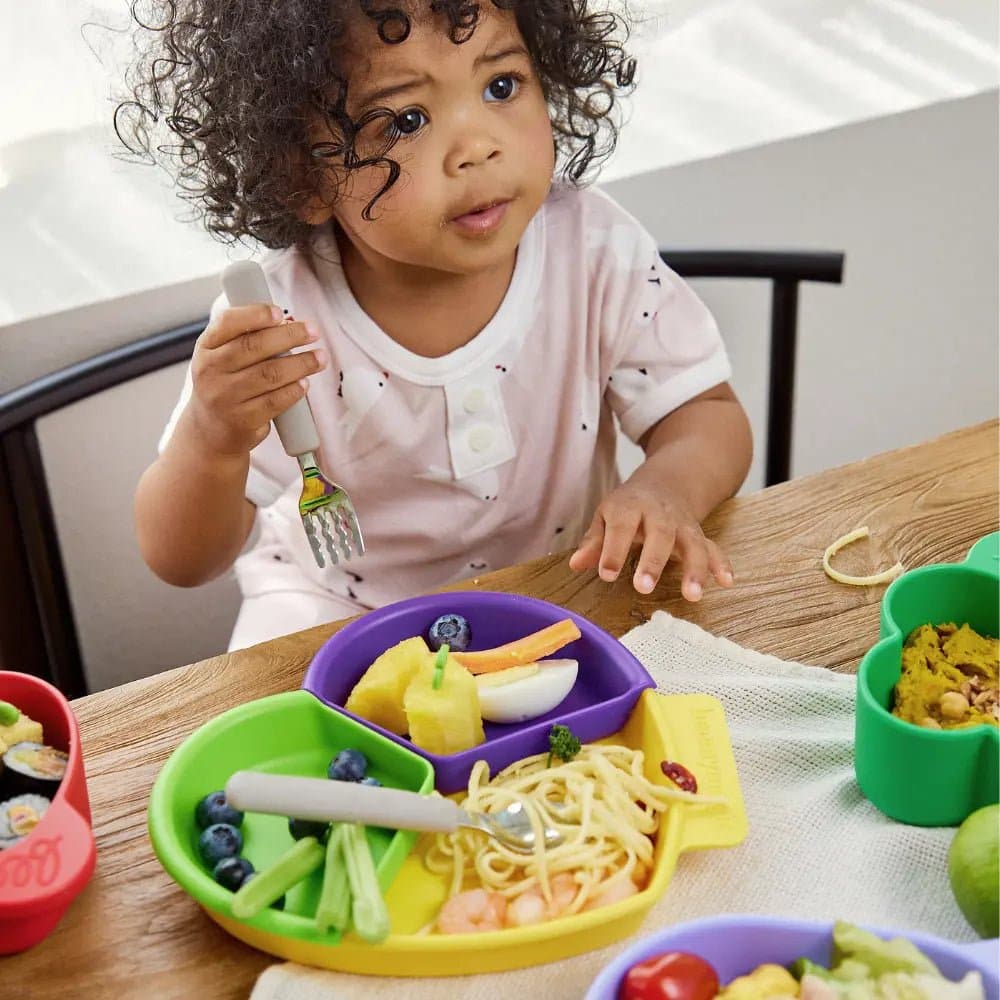
15 months–3 years (toddler chaos era): By now the battle isn’t just about suction — it’s about whether the plate or bowl is appealing enough that your toddler doesn’t immediately reject it on aesthetic grounds. This age group responds to color, compartments, and anything that feels like their choice. Divided plates with suction bases earn their keep here.
The honest answer: probably both, at different stages. But if you’re buying one first, here’s the breakdown.
Suction bowls are better for early solids and purees. The contained shape keeps food in place during spoon-feeding and makes it easier for babies to scoop as they develop that skill. They’re also better for single-food servings — yogurt, oatmeal, mashed vegetables.
Suction plates come into their own when you’re offering mixed meals or trying to prevent your toddler from mixing foods they’ve decided should never touch. Divided suction plates give a toddler the visual separation they often need to actually engage with a meal. They also create a larger suction footprint by default, which helps with overall stability.
The caveat: suction plates with large flat bases are harder to seal on curved or textured trays. If your high chair tray has any texture, a smaller-base suction bowl often outperforms a large flat plate in real-world hold.
Once you know what to look for — wide-perimeter suction base, certified food-grade silicone, dishwasher-safe construction — the shortlist gets short fast. The Beemymagic silicone tableware range, available at Onzenna, is built around exactly those specs: a wide-perimeter suction base instead of a single central cup, which addresses the lateral-force problem directly, and silicone grade that holds up to the dishwasher cycles you’re actually going to do. It’s not the flashiest thing on the market. It’s the thing that stays on the tray while your toddler attempts to renegotiate the entire meal.
Yes, quality suction bowls work well on smooth, flat surfaces like high chair trays, but they’re less effective on textured or curved surfaces, and determined toddlers can still pop them off with effort.
Suction bowls work best once babies can sit independently in a high chair, typically around 6 months, though some parents start using them earlier for feeding on flat surfaces.
Clean both the bowl’s suction cup and the tray surface thoroughly before each use, ensure the tray is completely dry, and press down firmly for several seconds to create a proper seal.