

Ingredients
The Best Korean Baby Skincare Routine: Gentle Steps for Newborn Skin
Soyeon Park·11 min read

Bamboo baby towels are everywhere — but are they actually softer and safer? Here's what the material science says, minus the marketing fluff.
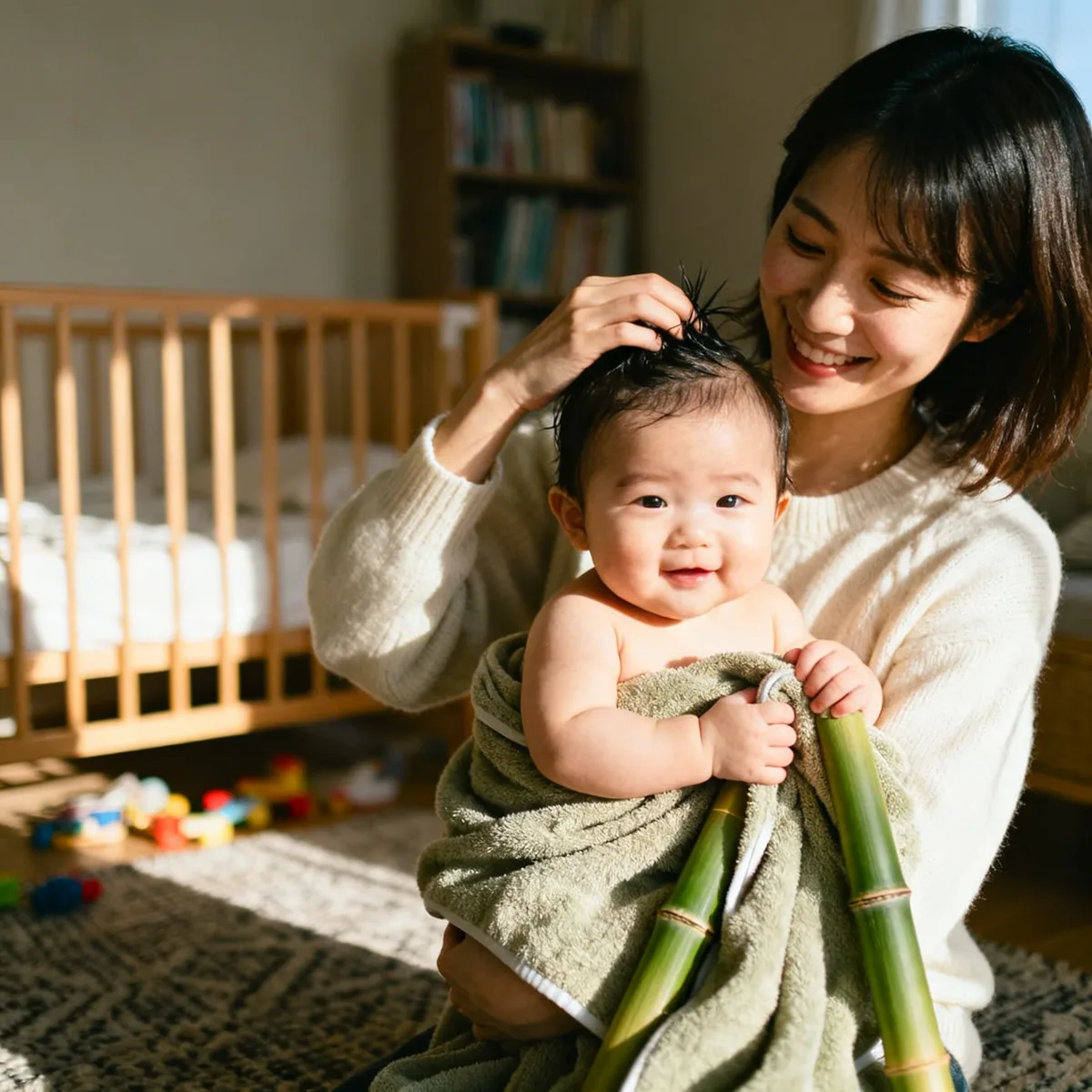
Here’s the thing about bamboo baby towels: they’re not just a trend. But they’re also not magic. The “bamboo = better” marketing is everywhere right now, and it’s doing what marketing does — oversimplifying something that’s actually worth understanding properly. Because yes, there are real reasons bamboo fabric can be a smarter choice for your baby’s skin. There are also things brands conveniently leave off the label. The difference between a bamboo towel that actually delivers and one that’s just riding the buzzword comes down to how it’s made, what it’s blended with, and what certifications it carries. Here’s what you actually need to know before you buy.
This part matters before you can understand why material choice isn’t trivial. A newborn’s skin barrier is significantly thinner and more permeable than adult skin — it absorbs more, loses moisture faster, and reacts to irritants more intensely. Research published in pediatric dermatology literature consistently shows that newborn skin doesn’t reach full barrier function maturity until around two years of age.
What that means practically: the towel you’re using after every single bath isn’t a neutral object. The texture, the chemical residue from processing, the dye — all of it is making contact with skin that is genuinely more vulnerable. So the question “does towel material matter?” has a clear answer. It does. More than most people realise.
“Bamboo” on a label doesn’t tell you as much as you think. The plant itself is impressive — grows fast, requires no pesticides, needs minimal water. But the fabric you’re wrapping your baby in has been through a process. Bamboo starts as a plant and ends up as a fibre through one of two main routes:
Almost every “soft bamboo” product on the market is bamboo viscose or bamboo rayon. That’s not automatically bad — but it means the softness, safety, and quality depend entirely on the manufacturing standards of that specific product. The bamboo origin story doesn’t transfer automatically to the finished towel.
Often, yes — but it depends on the GSM (grams per square metre, basically the weight and density of the fabric) and the blend. High-quality bamboo viscose has a naturally fine, smooth fibre structure that feels noticeably silky against skin. Compared to standard cotton terry, it typically wins on softness straight out of the packaging.
That said, organic cotton at a high GSM can be just as gentle. The “bamboo vs cotton” debate is less about which plant wins and more about quality tiers. A cheaply made bamboo towel will pill, stiffen after washing, and feel scratchy within a few months. A well-made bamboo blend — particularly bamboo-cotton — tends to hold its softness longer and offer the best of both: bamboo’s silkiness plus cotton’s durability and absorbency.
If you want a specific starting point: the BambooBebe towels available at Onzenna are a bamboo blend engineered to hold their softness through repeated washing — which, with a baby, is the only test that actually matters.

“Natural” does not mean safe. “Bamboo” does not mean chemical-free. Here’s what to look for instead of taking the label at face value:
When bamboo fabric is well-made and certified, there are genuine advantages beyond softness:
Budget bamboo baby towels exist, and some are fine. But here’s what drops off as the price drops: GSM (thinner fabric), certification (cheaper manufacturing rarely carries OEKO-TEX), and blend quality (more filler fibres, less bamboo). The towel might feel soft in the store and scratch within a month.
Mid-range and premium bamboo towels — especially from brands that specialise in baby textiles rather than producing baby products as an afterthought — tend to carry certifications, use genuine bamboo-cotton blends, and last through the volume of washing a baby requires. When you factor in that a good towel will outlast infancy and work through the toddler years, the cost-per-use argument for quality usually wins.
This is the part people skip, and then wonder why their expensive bamboo towel is scratchy by month three. A few rules:

American Academy of Dermatology (AAD) — Guidance on newborn skin barrier immaturity and vulnerability to environmental irritants (aad.org)
OEKO-TEX Association — STANDARD 100 certification criteria for harmful substances in textiles, including baby textile categories (oeko-tex.com)
They can be — bamboo viscose tends to have a finer, smoother fibre that’s less likely to irritate sensitive skin than standard cotton terry. But the certification matters as much as the material. Look for OEKO-TEX certified bamboo towels specifically.
High-quality, certified bamboo baby towels are generally well-tolerated by newborn skin. The key is choosing products with verified safety certifications like OEKO-TEX Standard 100, which test for harmful chemical residues from the manufacturing process.
Good-quality bamboo blends do — if you wash them correctly. Cool water, no fabric softener, low-heat drying. Skip those steps and softness drops off faster regardless of the material quality.
Bamboo viscose (also called bamboo rayon) is chemically processed and produces the soft, silky fabric most bamboo baby products use. Bamboo linen is mechanically processed and much coarser — not what you want for a baby towel. Most “soft bamboo” products are viscose.
Often, yes. Bamboo-cotton blends combine bamboo’s softness with cotton’s structure and durability. Pure bamboo viscose can feel luxurious but may lose shape or pill faster with heavy use. A well-balanced blend tends to perform better over the long term.