


Activities & Play
Road Trip with Toddler: Tips, Activities & Packing Strategy That Actually Works
Jeehoo Jeon·11 min read

Month-by-month baby sensory activities for newborns to 12 months. Support brain development with safe, simple activities using household items. Expert guide inside.
Here’s what nobody tells you: your baby’s brain is forming over one million new neural connections every single second during their first year. That means every texture they touch, every sound they hear, every face they study is literally building their brain — and understanding baby sensory activities by age helps you make those moments count.
The good news? You don’t need a fancy curriculum or expensive toys. You need to know what your baby is developmentally ready for at each stage, then meet them there with simple, intentional sensory experiences. From newborn visual tracking to 12-month problem-solving through touch, this guide breaks down exactly which activities support brain development when — and how to do them safely.
Here’s something nobody tells you in the hospital: your baby’s brain is doing the most intense work of its entire life right now.
In the first year, your baby’s brain forms over one million new neural connections every single second. Every texture they touch, every sound they hear, every face they study — it all counts. It’s all building something.
The senses aren’t just how your baby experiences the world. They’re how your baby builds their world. Touch, sight, sound, smell, and movement each activate different neural pathways. The more those pathways get used, the stronger they become.
The AAP recommends that caregivers engage babies in frequent face-to-face interaction and varied sensory experiences from birth, noting that responsive, stimulating environments directly support healthy brain architecture in the early years.
What that means practically: you don’t need a curriculum. You need presence. A crinkly toy. A soft song. Grass under bare feet. Your face two inches from theirs.
Baby sensory activities work because they meet the brain where it already is — hungry for input, wired to learn through experience, not instruction.
And it’s not just cognitive development. The sensory systems themselves — proprioception, vestibular, tactile — are all maturing during this window. How your baby learns to process sensation now shapes how regulated and comfortable they feel in their body later.
If you’re tracking where your baby should be developmentally, it helps to know what’s typical at each stage. Understanding 3-4 month milestones can give you a clearer picture of which senses are coming online and when.
You’re not behind. You’re not doing it wrong. Every ordinary moment you share with your baby is already doing the work.
Here’s what nobody tells you: you don’t need a single toy for this stage. Your face is the most interesting thing your newborn has ever seen.
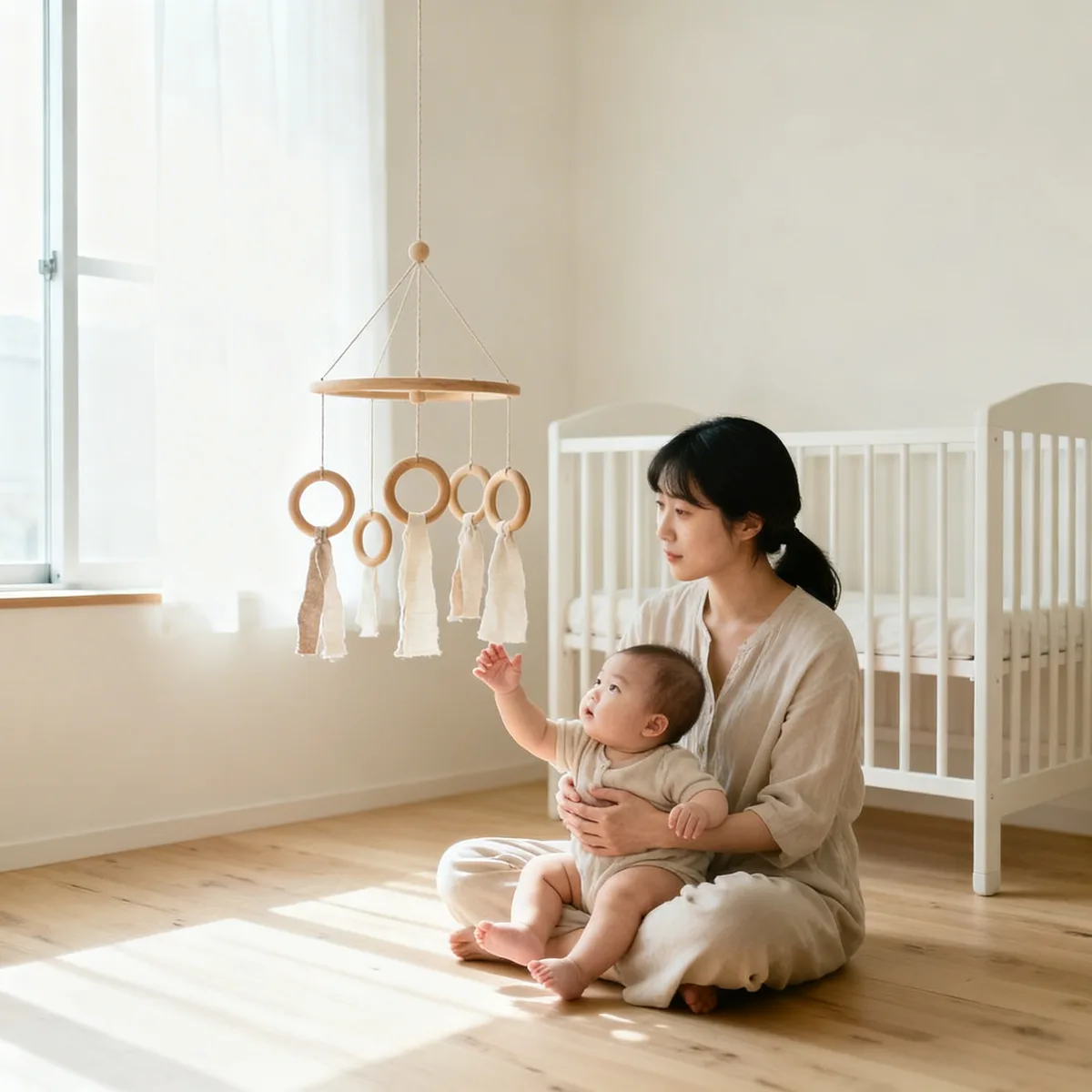
In the first weeks, their vision is still blurry — they see best at about 8 to 12 inches away. That’s exactly the distance between your face and theirs during a feed. So hold their gaze. Slow blink. Stick out your tongue. They’re watching everything.
Visual tracking starts simple. Move your face slowly side to side while they’re alert. A high-contrast black and white card held nearby works too — their eyes will try to follow it. You’ll see the effort. It’s real work for them.
For sound, your voice is enough. Narrate your day out loud. Sing something — doesn’t matter what. A soft rattle shaken gently to one side, then the other, helps them start turning toward sound. That’s a big deal at this age.
Tactile experiences don’t need to be elaborate. Skin-to-skin on your chest. Different fabric textures during diaper changes — a soft muslin, a slightly rougher cotton. Gentle infant massage with a little oil, long strokes down their arms and legs.
Tummy time counts here too. Even two to three minutes on a firm surface gives them pressure feedback through their whole front body. If they hate it, try it on your chest instead. Same input, less protest.
These baby sensory activities are quiet and unglamorous. They look nothing like the Pinterest version. But this is genuinely what their nervous system needs right now — your presence, repetition, and gentle novelty.
And if you want to plan ahead, sensory bins for 1 year olds are where a lot of this early groundwork pays off. But you’re nowhere near there yet. Right now, this is plenty.
Three to six months is when things start to get genuinely fun. Your baby is lifting their head, finding their hands, and starting to understand that they can make things happen.
That’s the big shift. Cause and effect. Shake a rattle and it makes noise. Kick a dangling toy and it moves. Their brain lights up every single time.
You don’t need a sensory kit for this. silicone teether
Water play is underrated at this age. A shallow, warm bowl with a clean washcloth during bath time counts. Let them feel the temperature change. Let them splash. Watch their face when they figure out their own hand made that happen.

Rattles with see-through shells Watching the beads move while they shake it is genuinely developmental, not just cute.
Mirror play is another one. Hold them up to a baby-safe mirror and just let them stare. They have no idea that’s them yet, and that’s fine. The high contrast and the movement are doing plenty.
Talking through everything you do together counts as sensory input too. Your voice is still one of the most regulating things in their world. Narrate the textures, the temperatures, the sounds. It all goes in.
These baby sensory activities don’t need a theme or a setup. They need you, a few interesting objects, and about ten minutes of unhurried time.
And if you’re already thinking ahead to pediatric checkups to ask about development milestones, it helps to know what to expect at baby’s first pediatrician visit so you’re not walking in unprepared.
This age is a lot. They want everything, they want it now, and they will absolutely put it in their mouth.
That’s not a problem to solve. That’s how they’re supposed to learn.
Between six and nine months, babies are either sitting up and reaching, pulling toward crawling, or somewhere beautifully in between. Their hands are doing real work now. Give them something worth grabbing.
A simple texture basket is one of the best things you can put in front of a sitter. A wooden spoon. A silicone brush. A piece of crinkly fabric. A smooth river stone (big enough that there’s zero choking risk). Let them pick it up, turn it over, mouth it, drop it, find it again.
That whole cycle? That’s the play. You don’t need to direct it.
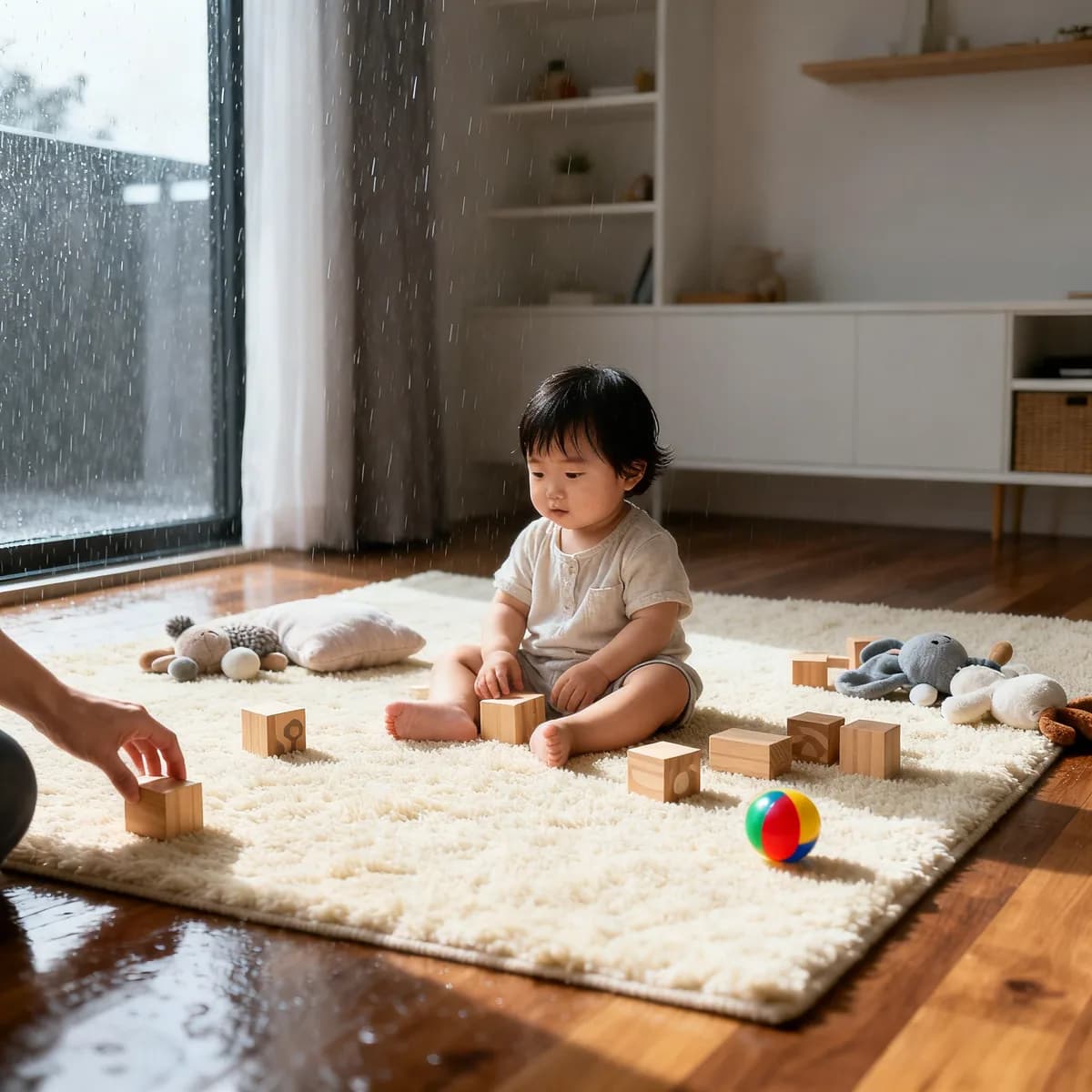
For crawlers, movement itself becomes the sensory experience. A strip of bubble wrap on the floor. A baking tray with a little water in it. Grass under bare feet if you’re outside. Their whole body is gathering information.
Sound exploration is huge right now too. Tap two wooden blocks together and watch their face. Let them bang a metal bowl. Fill a small sealed container with rice and shake it. They’ll do it back. That back-and-forth is language development happening in real time.
If you’re already doing baby-led weaning, you’re actually ahead — food is one of the richest sensory environments at this age. Squishy, cold, smooth, lumpy. It all counts.
Keep it simple. Rotate objects every few days so things feel new again. And get down on the floor with them when you can. Your presence makes the whole thing more interesting to them.
This age is a lot. They’re into everything, nothing stays where you put it, and you’re basically baby-proofing in real time.
But here’s what’s actually happening underneath all that chaos — their brain is making connections faster than at almost any other point in their life.
They’re figuring out that actions have consequences. That things exist even when they can’t see them. That if they push hard enough, something moves.
That’s object permanence and cause-and-effect thinking, and you don’t need fancy equipment to support it.
Hide a toy under a cloth and let them find it. Drop things into a container, then dump it out. Stack two cups and watch them knock it over — then do it again.
The repetition isn’t boredom. It’s how they learn that the world is predictable. That’s genuinely important stuff.
For the pincer grip — that two-finger pinch they’re working on — small, safe objects are your best tool. Cereal puffs, soft cooked vegetables, pieces of banana. If you’re doing blw finger foods, you’re already covering this beautifully. Mealtime is fine motor work disguised as lunch.
Texture boards, fabric books, and simple nesting toys also do a lot at this stage. Anything that requires them to figure out how it works — turn it, pull it, push it through a hole — is building real problem-solving foundations.
You don’t need a perfectly curated baby sensory activities setup. A muffin tin with a ball in each cup. A wooden spoon and a pot. A crinkly bag.

What matters most is that you give them a little time to figure things out before you step in. The struggle is the learning. Let it happen.
Here’s the thing nobody tells you: the same activities that light up your baby’s brain are often the ones that make you hold your breath. That tension is real. And it’s worth taking seriously.
The number one rule, at every single stage — you stay in the room. Not nearby. In the room, eyes on them. Sensory play is not independent play for babies under two.
For newborns and young infants, anything small enough to fit through a toilet paper roll is a choking hazard. That rule doesn’t change until around three years old. When in doubt, bigger is always safer.
Safe materials for babies who mouth everything — and they will mouth everything — include silicone, untreated wood, natural fabrics, and food-grade items. Avoid anything with flaking paint, small parts that can break off, or synthetic filling that could spill out.
Water play needs extra eyes. Even an inch of water in a bin is enough to be dangerous. Never step away during water activities, even for a second.
As your baby moves from lying to sitting to pulling up, your safety checklist shifts with them. A low bin that was fine at four months can be tipped over at eight months. A sensory bag that was perfect for hands becomes something they try to climb on once they’re mobile. Keep reassessing.
Watch for skin reactions too — especially when you’re introducing new textures like playdough, foam, or natural materials. If you’re noticing redness or irritation alongside teething, it’s worth reading up on infant teething rash to understand what’s play-related and what might need attention.
The goal isn’t to remove all risk. It’s to create a space where curiosity can happen safely, with you right there watching it unfold.
Here’s something nobody tells you: you don’t need a playroom full of expensive toys to give your baby meaningful sensory experiences. Your home is already full of them.
The real challenge isn’t finding enough stimulation. It’s keeping things from becoming overwhelming — for your baby and honestly, for you too.
Toy rotation is one of the simplest things you can do. Put two-thirds of the toys away and swap them out every week or two. What comes back out feels brand new to your baby, and your living room stops looking like a daycare exploded in it.
For baby sensory activities, you don’t have to buy a single thing. A wooden spoon and a pot. A crinkled piece of foil. A soft scarf in a contrasting color. Ice cubes in a shallow dish during a warm afternoon. These everyday items hit different textures, temperatures, and sounds — exactly what developing brains are hungry for.
A few things to keep in mind when you’re pulling from the kitchen or linen closet: no small parts, nothing with sharp edges, and always be within arm’s reach. Common sense, but worth saying out loud.
The environment matters as much as the objects in it. A calm, uncluttered space actually helps your baby focus and explore more deeply. Soft lighting, one activity at a time, and a predictable little corner they associate with play — that goes a long way.
You don’t need to engineer every moment. Set something interesting in front of them and then just… be there. Watch what they reach for. Follow their lead.
And if you’re planning any adventures outside the home, know that sensory exploration travels well — check out these traveling with a baby tips for keeping things manageable on the move.
Newborns thrive with gentle, low-key sensory input: your face and voice, simple visual tracking with high-contrast objects, soft rattles moved slowly to encourage sound localization, and skin-to-skin contact with varied fabric textures. Avoid anything with small parts, loud noises, or overstimulation — newborns have a low threshold and need calm pauses between activities.
There’s no strict quota. Sensory play happens naturally throughout your day — during feeds, diaper changes, tummy time, and everyday interactions. The key is responsive presence: narrate what you’re doing, offer varied textures and sounds, and follow your baby’s cues. If they look away or fuss, they’ve had enough.
Yes. Sensory play supports neural development, motor skills, and sensory system maturation, all of which contribute to better self-regulation and sleep. Babies who’ve had varied, calming sensory experiences during the day often find it easier to settle at night — but overstimulation late in the day can backfire, so aim for sensory richness during awake windows, not right before bed.
You likely have everything you need already: wooden spoons, soft scarves, textured kitchen towels, crinkly paper, safe plastic containers, washcloths, music, natural items like grass or sand (supervised), and your own hands and voice. Rotate items to keep novelty fresh without clutter.
Tactile exploration can start from birth with supervised, safe fabrics during everyday moments like diaper changes and feeds. By 4-6 months, babies become more intentional grabbers, so you can introduce safe textured objects they can hold and mouth (always choking-hazard free). By 9-12 months, they’re confident enough to explore a wider range of textures independently, though supervision remains essential.