Health Guides
Tongue Tie in Babies: Signs, Diagnosis, Treatment & Breastfeeding Recovery
Jeehoo Jeon·10 min read

Complete guide to baby eczema treatment. Learn causes, identify symptoms, explore medical and natural remedies, prevent flare-ups, and know when to see a dermatologist.
Here’s what most parents discover too late: baby eczema treatment isn’t about finding the right cream — it’s about understanding why your baby’s skin is reacting in the first place.
Up to 25% of children develop atopic dermatitis, often before age five, and the triggers that cause flare-ups aren’t always obvious. Genetics load the gun, but environment pulls the trigger — and once you know which is which, you can actually prevent the itching and inflammation instead of just chasing it.
This guide covers what baby eczema is, how to spot it, treatment options that actually work, daily routines that prevent flare-ups, and when you need to see a specialist.
Atopic dermatitis — commonly called baby eczema — is a chronic inflammatory skin condition that causes dry, itchy, and irritated patches, most often appearing on the cheeks, scalp, and the creases of the elbows and knees.
It is one of the most common skin conditions in infancy. The AAP notes that atopic dermatitis affects up to 25% of children, with symptoms frequently beginning before age five.
Genetics play a significant role. If one or both parents have eczema, asthma, or allergic rhinitis — a cluster doctors call the “atopic triad” — a baby’s likelihood of developing the condition increases substantially.
The skin barrier is the other piece of the puzzle. Babies with eczema often have a mutation in the gene that produces filaggrin, a protein that helps skin hold moisture and block out irritants. Without enough filaggrin, the skin barrier is compromised from the start.
Environmental triggers layer on top of that genetic vulnerability. Dry air, synthetic fabrics, fragranced detergents, saliva from drooling, and even temperature changes can all provoke a flare.
Baby skin is structurally different from adult skin — thinner, with a less developed acid mantle, making it harder to regulate moisture and more permeable to potential irritants. This is why the same exposure that causes no reaction in an older child can trigger visible inflammation in a newborn.
Understanding these underlying mechanisms matters when thinking about baby sunburn treatment and other skin-related care decisions — the same fragile barrier that makes eczema more likely also makes all forms of skin stress harder for babies to recover from.
Eczema is not caused by poor hygiene or something you did wrong. It is a biological predisposition, shaped by genetics and environment, that requires consistent and informed management.
Eczema in babies typically appears as red, dry, scaly patches that may look inflamed or slightly raised. In darker skin tones, the redness can appear more purple, brown, or grey — something worth knowing so you don’t dismiss it.
The location of the rash often shifts with age. In babies under six months, it tends to appear on the face, forehead, and scalp. From around six months onward, it commonly spreads to the elbows, knees, and wrists — areas that bend and rub against surfaces.
Itchiness is a defining feature. You may notice your baby rubbing their face against bedding, scratching at their skin, or becoming fussier than usual, particularly at night when skin tends to dry out further.
The AAP notes that eczema affects up to 25% of children, and in most cases the first signs appear before age five — often within the first six months of life.
Weeping or crusting patches indicate the skin may be broken or infected. This is different from the usual dry presentation and warrants closer attention.
Contact your pediatrician if the rash is spreading rapidly, if your baby seems in significant discomfort, or if the skin shows signs of infection — warmth, oozing, or yellow crusting. A doctor can confirm the diagnosis and discuss appropriate baby eczema treatment options for your child’s specific presentation.
Also reach out if over-the-counter moisturizers aren’t providing relief after consistent use, or if the rash is affecting your baby’s sleep. These are signals that a more targeted approach may be needed.
The right approach depends on severity. Mild eczema often responds well to consistent moisturizing alone. More persistent cases may need medical intervention.
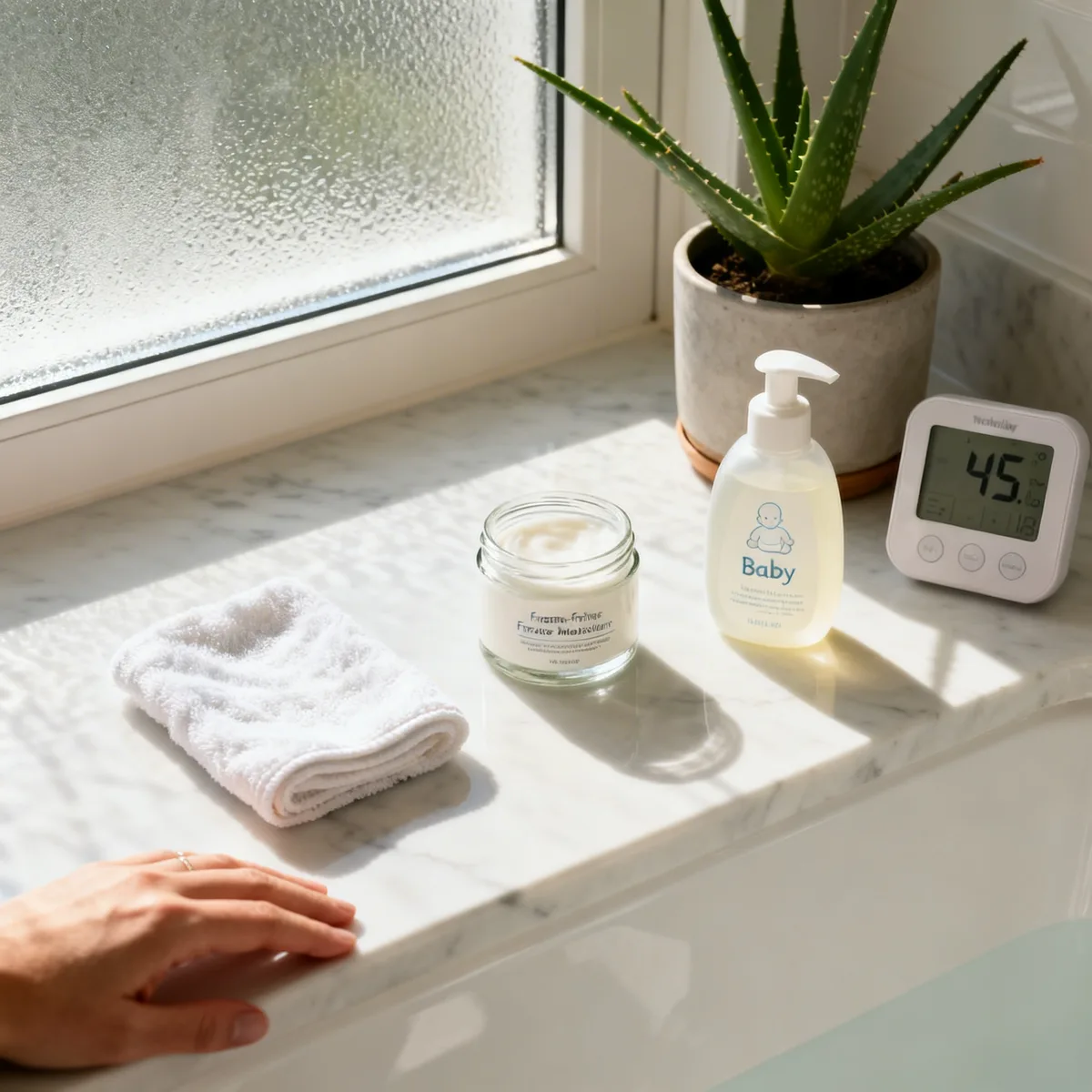
The AAP recommends applying a fragrance-free, thick cream or ointment — not a lotion — within three minutes of bathtime to lock in moisture before the skin barrier has a chance to dry out.

For moderate-to-severe flares, pediatric dermatologists typically prescribe low-potency topical corticosteroids. These are applied directly to inflamed areas for short periods. They’re well-studied and considered safe when used as directed.
If steroids aren’t appropriate or aren’t working, doctors may recommend topical calcineurin inhibitors (TCIs) like tacrolimus or pimecrolimus. These are non-steroidal prescription options for babies over two years old.
For over-the-counter support, look for products formulated specifically for sensitive or eczema-prone infant skin — free from fragrance, dyes, and known irritants. Cha&Mom is one that fits that criteria and is worth trying before escalating to prescriptions.
On the natural side, colloidal oatmeal is one of the most evidence-backed options. It’s recognized by the FDA as a skin protectant and has measurable anti-inflammatory properties in clinical studies.
Wet wrap therapy is another approach — applying moisturizer to damp skin, then covering with a wet layer of clothing followed by a dry layer. It’s typically used during flares and works best under medical guidance.
What you avoid matters as much as what you apply. Identifying and removing triggers — certain fabrics, soaps, detergents, or food allergens — can reduce flare frequency significantly over time.
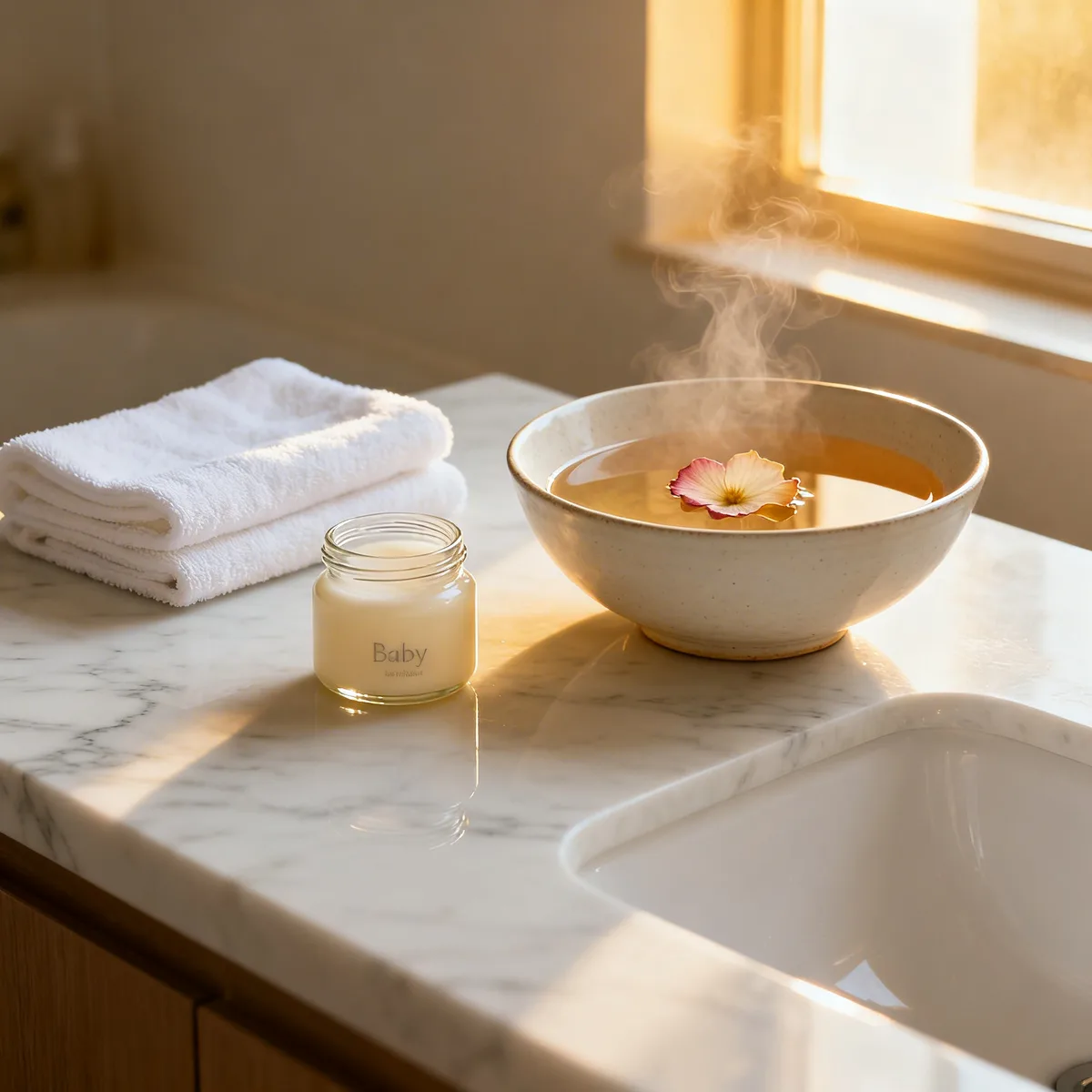
Consistency is the foundation of any effective baby eczema treatment plan. The AAP recommends bathing babies with eczema once daily in lukewarm water — not hot — for five to ten minutes.
Use a fragrance-free, soap-free cleanser. Standard soaps raise skin pH and disrupt the skin barrier, which the National Eczema Association identifies as a core driver of eczema flares.
Pat skin dry with a soft towel. Don’t rub. Friction on already-compromised skin increases inflammation.
Apply moisturizer within three minutes of bathing — this is the window when skin is still slightly damp and absorption is highest. The NIH National Institute of Arthritis and Musculoskeletal and Skin Diseases confirms that this “soak and seal” method measurably improves moisture retention in eczema-prone skin.
Choose a fragrance-free, dye-free emollient. Thick creams and ointments outperform lotions for barrier repair because they contain less water and more occlusive ingredients. Cha&Mom is fragrance-free and formulated specifically for sensitive infant skin — a practical match for this step.
Apply moisturizer at least twice a day, even when skin looks clear. Barrier function doesn’t recover overnight, and skipping applications between flares is one of the most common reasons flares return.
Dress your baby in loose, 100% cotton clothing after moisturizing. Synthetic fabrics and wool are common contact irritants that the CDC lists among environmental triggers worth controlling.
Keep nails trimmed short. Scratching introduces bacteria and turns a manageable flare into a potential infection.
Track what you use, what you change, and when flares appear. Patterns in that record are often more informative than any single test.
Triggers don’t cause eczema — but they reliably set off flares. The National Institute of Allergy and Infectious Diseases identifies four main categories: irritants, allergens, environmental factors, and emotional stress.
Soaps and body washes are among the most common irritants. Look for fragrance-free, dye-free formulas with a pH close to skin’s natural level (around 5.5). Most standard baby soaps sit above that range.
Laundry detergent residue stays in fabric after washing. Use a fragrance-free, dye-free detergent and run an extra rinse cycle on your baby’s clothes and bedding. Fabric softeners and dryer sheets are worth cutting out entirely — the CDC lists fragrance as a documented skin irritant.

Fabric choice matters beyond just softness. Wool and synthetic blends generate friction and trap heat, both of which worsen itch. Loose-fitting 100% cotton or bamboo fabrics are consistently better tolerated.
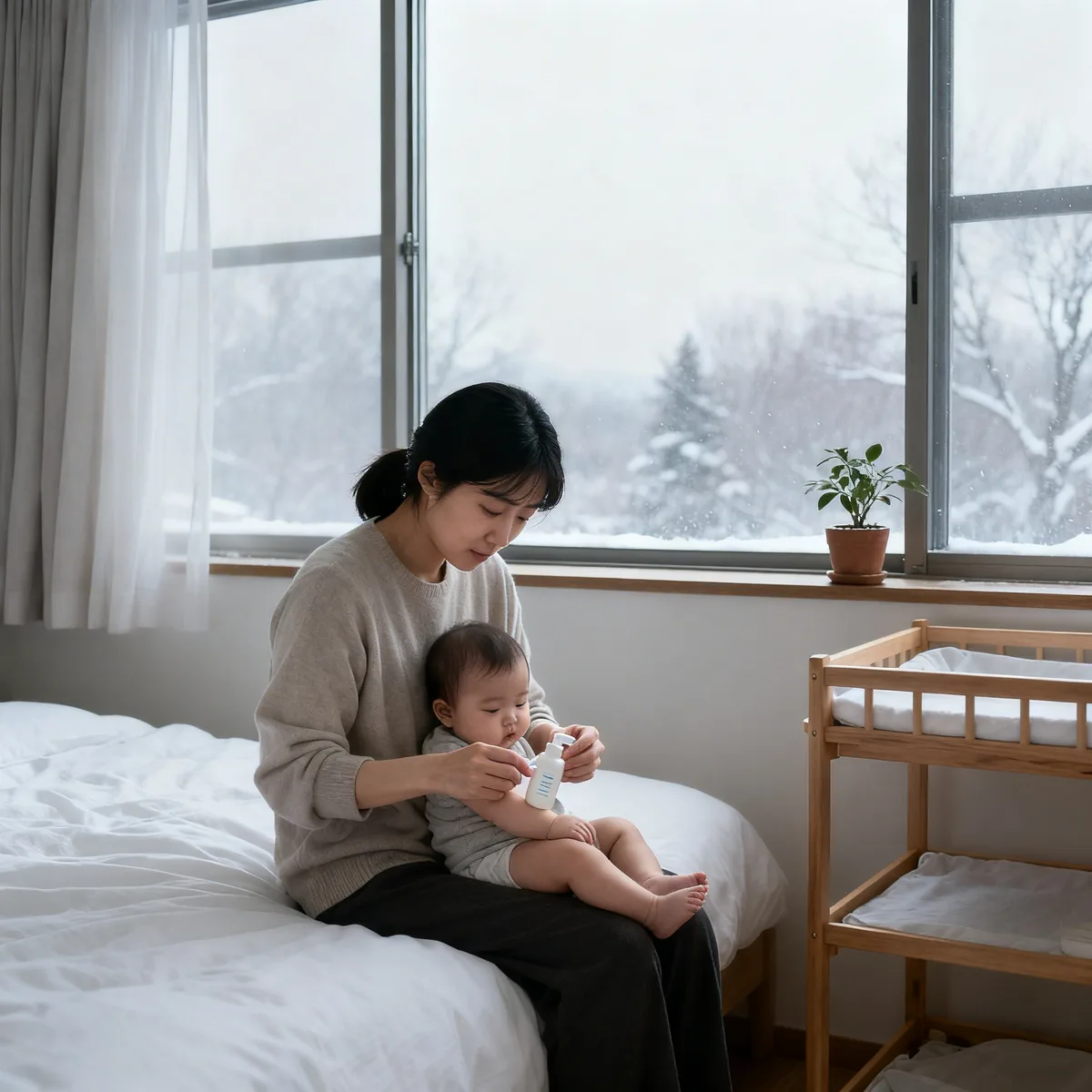
Climate is harder to control, but worth managing where you can. Low humidity dries the skin barrier. The AAP recommends keeping indoor humidity between 45 and 55 percent. A cool-mist humidifier in the room where your baby sleeps is a practical starting point.
Heat and sweat are underappreciated triggers. Overdressing, long baths in warm water, and vigorous activity can all precede a flare. Lukewarm baths of five to ten minutes — followed immediately by moisturizer — are the format the AAP recommends as part of consistent baby eczema treatment routines.
Pets, dust mites, and mold are allergen-category triggers. The NIH notes that dust mite exposure is particularly relevant for children with eczema. Washing bedding weekly in hot water and using allergen-proof mattress covers can reduce load significantly.
You won’t eliminate every trigger. The goal is reducing cumulative exposure — because it’s often the combination of several small irritants, not one single cause, that tips a flare into full onset.
Most eczema flares respond to consistent home care. But some signs tell you it’s time to move beyond your current baby eczema treatment plan and get specialist input.
Watch for skin that looks yellow, crusty, or weeping beyond normal dryness. These can indicate a bacterial infection — commonly Staphylococcus aureus — which requires medical treatment and won’t resolve with moisturiser alone.
Blisters, oozing, or a sudden worsening after a cold sore outbreak in a household member may signal a herpes-related skin infection called eczema herpeticum. This is a medical emergency. Seek care the same day.
Persistent scratching that disrupts sleep night after night, or skin so raw it bleeds regularly, also warrants a referral. The AAP recommends consulting a dermatologist or allergist when eczema is severe, not responding to standard treatments, or significantly affecting a child’s quality of life.
Before your appointment, document the pattern. Note which areas flare, what products you’ve used, how often you apply them, and any suspected triggers.
Bring a short list of everything currently on your baby’s skin — moisturisers, soaps, laundry detergents. Ingredients matter to a dermatologist, not just brand names.
If your child is also experiencing recurrent wheezing or persistent nasal symptoms, mention it. Eczema, asthma, and allergic rhinitis frequently occur together — a pattern clinicians call the atopic march.
A specialist may recommend patch testing, prescription topical treatments, or a structured elimination approach to identify contact triggers. You’ll leave with a clearer picture than any home process can give you.
The appointment itself isn’t a last resort. It’s simply a different tool — one calibrated for cases that need more than routine care.
No, baby eczema is not contagious. Atopic dermatitis is a genetic and environmental condition, not an infection, so your baby cannot spread it to other children through contact.
Avoid fragrances, dyes, parabens, sulfates, and alcohol-based ingredients. Look for products labeled fragrance-free and hypoallergenic, and patch-test new items on a small area first.
Diet can be a trigger in some babies, particularly after solid foods are introduced. Breastfeeding may offer some protective benefit early on, but eczema is primarily genetic and environmental rather than diet-driven alone.
Many children experience improvement as they age, with some outgrowing it by school age. However, symptoms can persist into adulthood, and flare-ups may continue even if overall severity decreases over time.
Yes, when prescribed by a pediatrician or dermatologist, topical steroids are safe and often necessary for moderate to severe eczema. Always follow your doctor’s dosing instructions and duration guidelines.