

Health Guides
Tongue Tie in Babies: Signs, Diagnosis, Treatment & Breastfeeding Recovery
Jeehoo Jeon·10 min read

Learn which baby eczema flare up triggers to avoid: detergents, fabrics, foods, and weather. Evidence-based strategies to prevent flares and protect sensitive skin.
Here’s what nobody tells you about baby eczema flare-ups: most of them aren’t random. They’re triggered by predictable irritants — many hiding in products you already use daily.
Most parents assume baby eczema flare up triggers are impossible to identify. But the truth is, once you know what to watch for, you can systematically remove exposure to the biggest culprits: harsh detergents, synthetic fabrics, temperature extremes, and hidden preservatives.
This guide breaks down exactly which baby eczema flare up triggers to avoid, how to spot them in your home, and what skincare practices actually prevent flares — so your baby can sleep through the night and you can stop playing detective with every product label.
Baby skin is structurally different from adult skin. The outer barrier — called the stratum corneum — is thinner, loses moisture faster, and absorbs irritants more readily. That physical reality is why babies are so much more vulnerable to eczema in the first place.
Genetics play the largest single role. If one parent has eczema, hay fever, or asthma, a baby’s risk of developing eczema roughly doubles. If both parents are affected, the risk is higher still.
Beyond genetics, there are consistent environmental baby eczema flare up triggers to avoid: synthetic fabrics, harsh detergents, cigarette smoke, and extremes of temperature. Dry winter air and overheated rooms are especially common culprits — both strip moisture from already-fragile skin.
Saliva is another underestimated trigger. Repeated contact around the mouth during feeding and teething phases can break down the skin barrier in that area specifically.
Food sensitivities can also drive flares in some babies, particularly reactions to cow’s milk protein and egg. If you’re navigating this alongside eczema, the guidance on introducing allergens to baby is worth reading alongside any eczema management plan.
The AAP notes that eczema, food allergies, and asthma often cluster together in the same children — a pattern known as the atopic march — which is why identifying and managing triggers early matters beyond skin comfort alone.
Stress and disrupted sleep can also worsen symptoms. The itch-scratch cycle is real: itching interrupts sleep, poor sleep lowers the skin’s ability to repair itself, and the inflammation intensifies. It compounds quickly.
Knowing which category a trigger falls into — genetic, environmental, or physical — helps you approach management systematically rather than trying to change everything at once.
Certain household products are among the most frequent baby eczema flare up triggers to avoid. The challenge is that many of them are marketed as gentle or natural — labels that carry no regulated standard for sensitive skin.
Laundry detergents are one of the most consistent culprits. Fragrances, optical brighteners, and preservatives like methylisothiazolinone leave residue on fabric that stays in contact with your baby’s skin for hours at a time.
Fabric softeners and dryer sheets work by coating fibres with chemical compounds — that “softness” is a residue. For babies with compromised skin barriers, that coating is a direct irritant.
Synthetic fabrics — polyester, nylon, acrylic — trap heat and reduce airflow. Heat itself is a trigger. Wool, despite being natural, has a coarse fibre structure that can cause mechanical irritation even without any chemical involvement.
Baby wipes deserve specific attention. Many contain preservatives such as phenoxyethanol, propylene glycol, or fragrance blends. The AAP recommends using fragrance-free, alcohol-free wipes on newborn and sensitive skin to reduce the risk of contact reactions.
Bath products are another significant source of exposure. Bubble baths, foaming washes, and shampoos formulated with sodium lauryl sulfate (SLS) strip the skin’s natural lipids — the very fats that help the skin barrier function. Even a short soak in a product containing SLS can leave the barrier more permeable for hours afterward.
Disinfectant sprays and household cleaners used on surfaces your baby touches — changing mats, play mats, high chair trays — transfer chemical residues directly to skin. Quaternary ammonium compounds, common in multipurpose sprays, are a known contact irritant.
Onzenna’s fragrance-free baby wash is formulated without SLS, parabens, or synthetic fragrance — the ingredient categories that appear most consistently across eczema research as contact irritants.
When you’re narrowing down triggers, it helps to change one product category at a time. That way, if a flare-up subsides, you know what caused it.
The skin barrier in babies with eczema is structurally compromised. It loses moisture faster than typical skin and absorbs irritants more readily — which makes environmental conditions a direct factor in flare frequency.
Cold, dry air is one of the most consistent triggers. In winter, both outdoor air and indoor heating strip ambient humidity, accelerating transepidermal water loss and leaving skin tight, itchy, and reactive.

Summer brings a different set of risks. Heat and sweat trigger itch-scratch cycles, and high humidity creates conditions where irritants and allergens cling to damp skin longer.
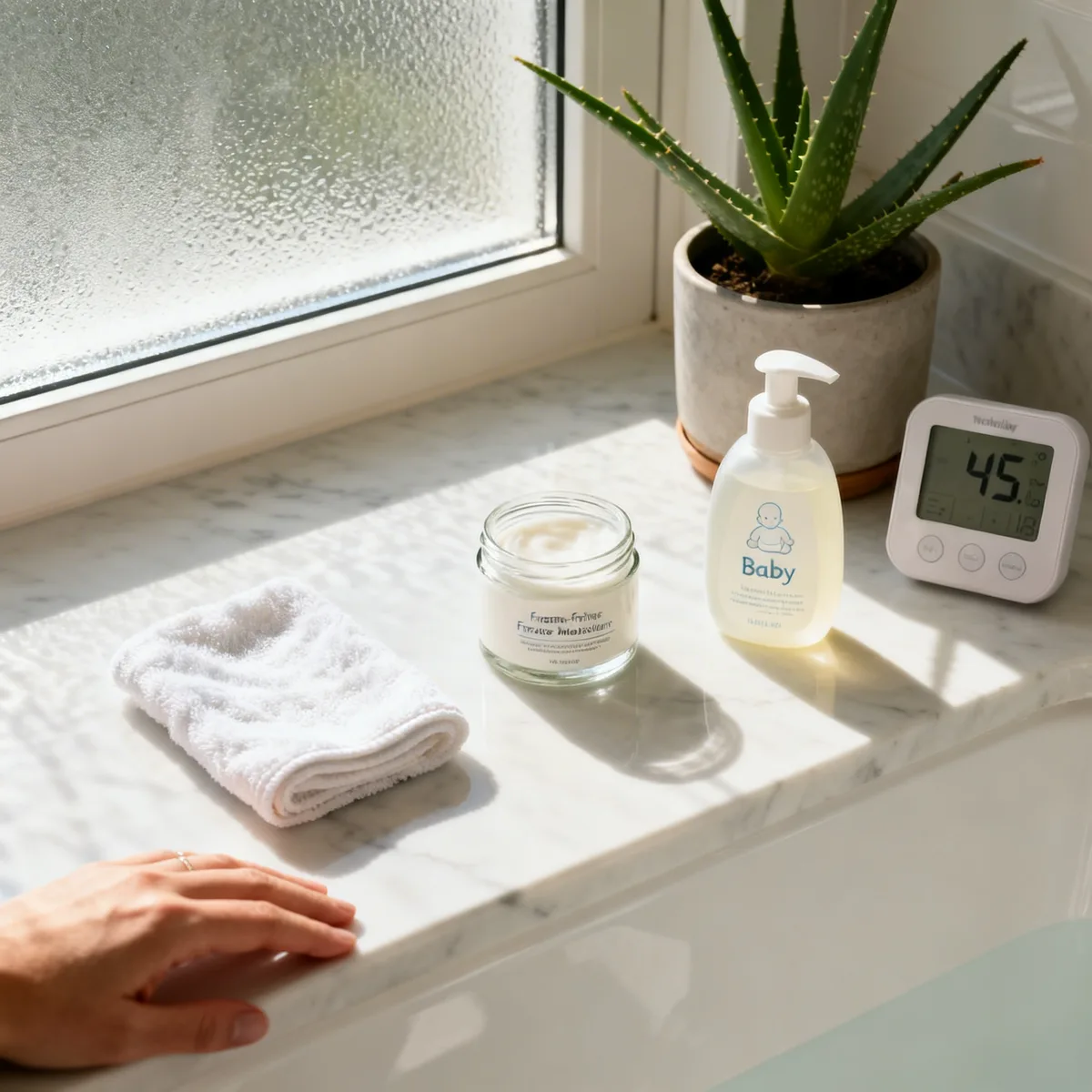
The AAP recommends keeping indoor humidity between 45 and 55 percent to help protect sensitive skin — a range that supports the skin barrier without creating conditions for mold or dust mites, which are triggers in their own right.
Seasonal transitions are particularly high-risk. As temperatures shift, so does indoor heating and cooling use, clothing weight, and time spent outdoors — multiple variables changing at once.
During these periods, a few practical steps help. Run a cool-mist humidifier in the room where your baby sleeps. Dress in breathable, loose-fitting layers — cotton over synthetics. Avoid prolonged sun exposure on irritated skin; if you do spend time outside, baby sunburn treatment guidance also applies to eczema-prone skin, since sunburn on a compromised barrier compounds the problem significantly.
Bathing routine matters here too. Short, lukewarm baths — not hot — followed immediately by moisturiser application while the skin is still slightly damp helps lock in hydration before environmental air can draw it back out.
When you’re tracking baby eczema flare up triggers to avoid, seasonal changes are worth logging alongside product changes. Environmental and product triggers often stack, and separating them helps you respond with more precision.
What your baby eats — or what you eat while breastfeeding — can directly influence skin inflammation.
The most common dietary culprits are cow’s milk protein, eggs, wheat, soy, and peanuts. These five foods account for the majority of food-related eczema flares in infants, according to research consistently referenced by paediatric dermatologists.
For breastfed babies, proteins from the foods you eat pass into breast milk. If your baby’s eczema flares without an obvious environmental cause, a short elimination trial — removing one food at a time — can help you identify a pattern. Work with your doctor before cutting major food groups, since your nutritional intake matters too.
For formula-fed babies, cow’s milk protein is the most likely dietary factor. The AAP recommends that infants with suspected cow’s milk protein allergy be trialled on an extensively hydrolysed formula, where the proteins are broken down enough that the immune system is less likely to react. If symptoms persist, an amino acid-based formula may be considered.
If you’re thinking about switching baby formula, it’s worth understanding whether the change is driven by allergy or sensitivity — the distinction affects which formula type is appropriate.
It’s also worth noting that a food sensitivity and a true food allergy are not the same thing. Sensitivity may cause a delayed skin reaction; a true allergy can cause immediate and more severe symptoms. A paediatric allergist can help you distinguish between the two with proper testing.
Keeping a feeding diary alongside a skin log is one of the most practical ways to surface dietary baby eczema flare up triggers to avoid — especially when reactions are delayed by 24 to 48 hours, which is common with food sensitivities in infants.
What goes on your baby’s skin — and how you apply it — matters as much as what you keep away from it.
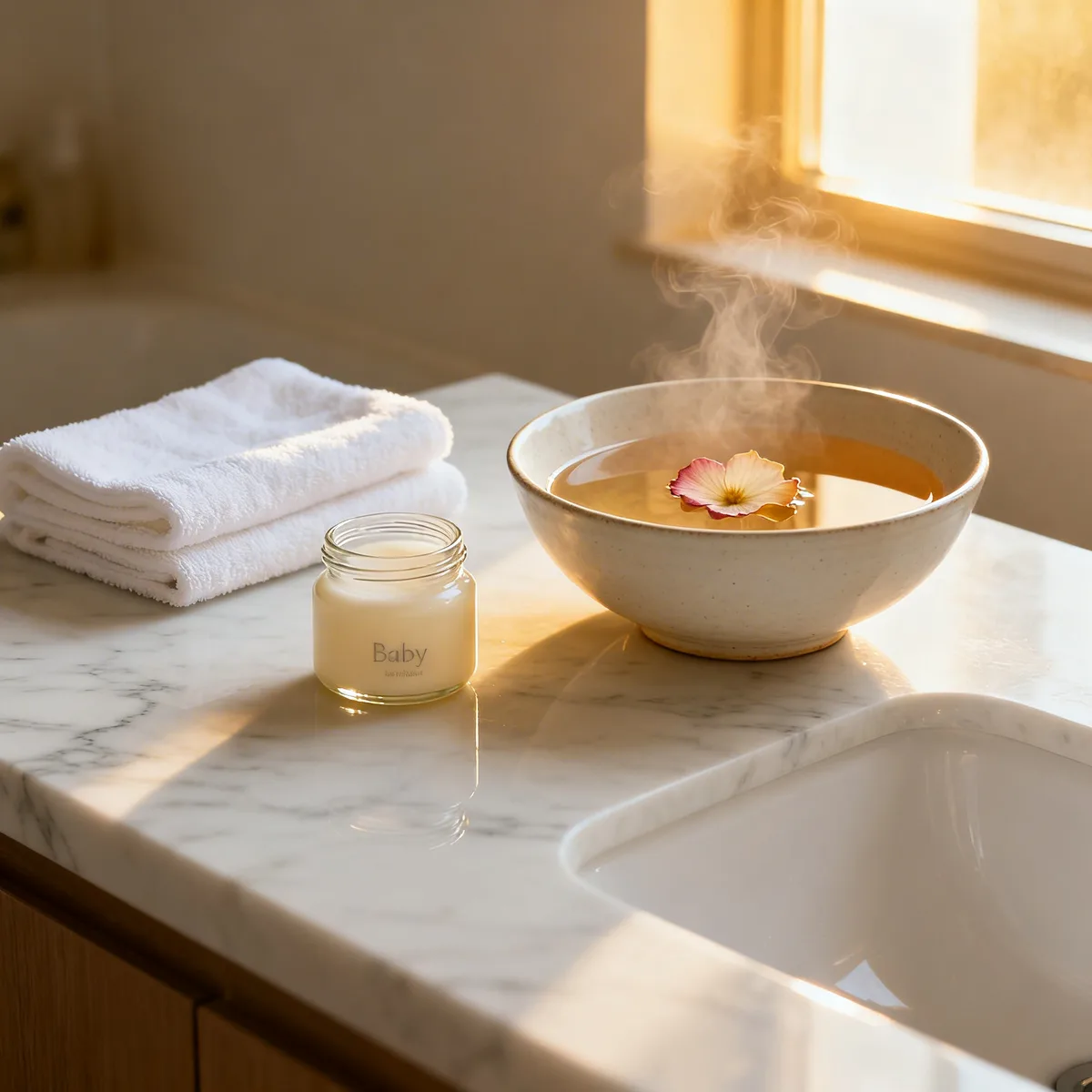
The AAP recommends bathing babies with eczema once daily in lukewarm water for no more than 10 minutes, using a gentle, fragrance-free cleanser. Hot water and long soaks strip the skin’s natural oils, weakening the barrier that keeps moisture in and irritants out.
After the bath, timing is everything. Pat skin dry gently — don’t rub — and apply moisturizer within three minutes while the skin is still slightly damp. This “soak and seal” approach helps lock in hydration before transepidermal water loss begins.
When selecting products, the ingredient list is your first filter. Avoid fragrances, dyes, preservatives like methylisothiazolinone, and botanical extracts, which are among the most common contact baby eczema flare up triggers to avoid in sensitive skin formulations.
Look for ceramide-containing moisturizers — ceramides are lipids that naturally exist in healthy skin and help reinforce the barrier when it’s compromised. Ointments and thick creams generally outperform lotions for children with eczema because they provide more occlusion.
If you’re looking for a place to start, a lot of parents find Cha&Mom worth trying — it’s formulated without fragrance or common sensitizers, which makes it easier to rule out product-related triggers.
Beyond products, fabric matters too. Dress your baby in loose, 100% cotton clothing and wash new items before first use. Residual detergent is a frequently overlooked irritant — use fragrance-free, dye-free laundry detergent for anything that touches their skin.
Keep the sleep environment cool and well-ventilated. Overheating triggers itching, and scratching during sleep can break the skin, creating an entry point for infection that compounds the flare.

Most mild eczema responds well to consistent moisturizing and efforts to identify and avoid baby eczema flare up triggers. But some cases move beyond what home care can manage.
Contact your pediatrician if the rash spreads rapidly, covers large areas of the body, or appears on the face near the eyes or mouth. These locations carry higher risk and often require prescription treatment.
Watch for signs of skin infection: oozing yellow or honey-colored crust, increased warmth and swelling around the rash, or small fluid-filled blisters. Broken skin from scratching creates an open entry point for bacteria, and infections need prompt medical attention.
If your baby is consistently losing sleep, feeding poorly, or seems distressed by itching, that level of impact on daily functioning warrants a clinical evaluation — not a wait-and-see approach.
The AAP recommends that children with moderate to severe eczema be evaluated for food allergies, particularly to milk, egg, and peanut, as these are among the most common triggers in infants whose eczema does not respond to standard care.
A pediatrician may refer you to a pediatric dermatologist or allergist depending on the presentation. Prescription-strength topical corticosteroids are the most established treatment for flares that don’t respond to over-the-counter options, and your doctor can guide appropriate use and duration.
If your baby’s symptoms involve digestive issues alongside skin flares, it’s worth reading about milk allergy vs lactose intolerance baby — the overlap can be easy to miss.
Eczema is manageable in most cases. A clear clinical picture, built with your doctor’s input, gives you a more precise path forward than home management alone can provide.
Your home environment plays a significant role in how often and how severely eczema flares. Many of the most common baby eczema flare up triggers are things you can actually control — fabric choices, cleaning products, and air quality among them.
Start with laundry. The AAP recommends washing baby clothes, bedding, and soft toys in fragrance-free, dye-free detergent. Residual detergent left in fabric can irritate broken skin, so an extra rinse cycle is worth adding.
Fabric matters too. Dress your baby in loose-fitting, 100% cotton clothing where possible. Wool and synthetic fibres can trap heat and cause friction — both known to worsen eczema.
Dust mites are one of the more researched environmental triggers. The American Academy of Allergy, Asthma and Immunology notes that encasing mattresses and pillows in allergen-proof covers, washing bedding weekly in hot water (at least 130°F/54°C), and reducing stuffed animals in the sleep space can meaningfully reduce exposure.
Indoor air quality is another factor. The CDC links low indoor humidity to dry skin flare-ups. A cool-mist humidifier in your baby’s room — kept clean to prevent mould — can help maintain moisture in the air, particularly in winter months when heating systems dry the air out.
Keep indoor temperatures stable and on the cooler side. Overheating triggers sweating, which irritates sensitised skin. This applies especially to sleep environments.
Pet dander is a documented allergen for some children with eczema. If you have pets, keeping them out of your baby’s sleep space and vacuuming frequently with a HEPA-filter vacuum reduces airborne particles.
Finally, look at your cleaning products. Household sprays, air fresheners, and scented candles release volatile organic compounds that can aggravate respiratory and skin sensitivity. Fragrance-free, low-chemical alternatives are a straightforward swap.
The most consistent triggers are laundry detergents with fragrances and preservatives, synthetic fabrics, extreme temperatures (especially dry winter air), harsh soaps, and baby wipes containing phenoxyethanol or fragrance blends. Genetic predisposition is the largest single risk factor — if either parent has eczema, hay fever, or asthma, your baby’s risk roughly doubles.
Watch for flares that appear within 24-48 hours of introducing a new product or changing laundry detergent. Pay attention to which body areas worsen first — irritant reactions often cluster in the areas where the product has most contact (like around the mouth if it’s saliva-related, or on the trunk if it’s your detergent). Try eliminating one product at a time and waiting 1-2 weeks before drawing conclusions.
No. Baby eczema is a genetic skin condition related to a compromised skin barrier, not cleanliness. In fact, over-washing or using harsh soaps can make it worse by stripping away protective oils. The AAP recommends lukewarm baths, minimal soap, and immediate moisturizing to support the skin barrier.
Yes, especially in breastfed babies whose mothers consume common allergens, or in formula-fed babies. Cow’s milk protein and egg are the most frequently linked to flares. The AAP notes that eczema, food allergies, and asthma often cluster together in the same children, so identifying and managing food sensitivities early matters for long-term health beyond just skin comfort.
Use lukewarm water (not hot), keep baths short (5-10 minutes), use fragrance-free and preservative-free cleansers only on visibly soiled areas, and apply thick moisturizer within 3 minutes of drying. Avoid bubble baths, heavily fragranced baby soaps, and loofahs or rough washcloths that can irritate delicate skin.